


Libya – Tuesday November 3, 2026
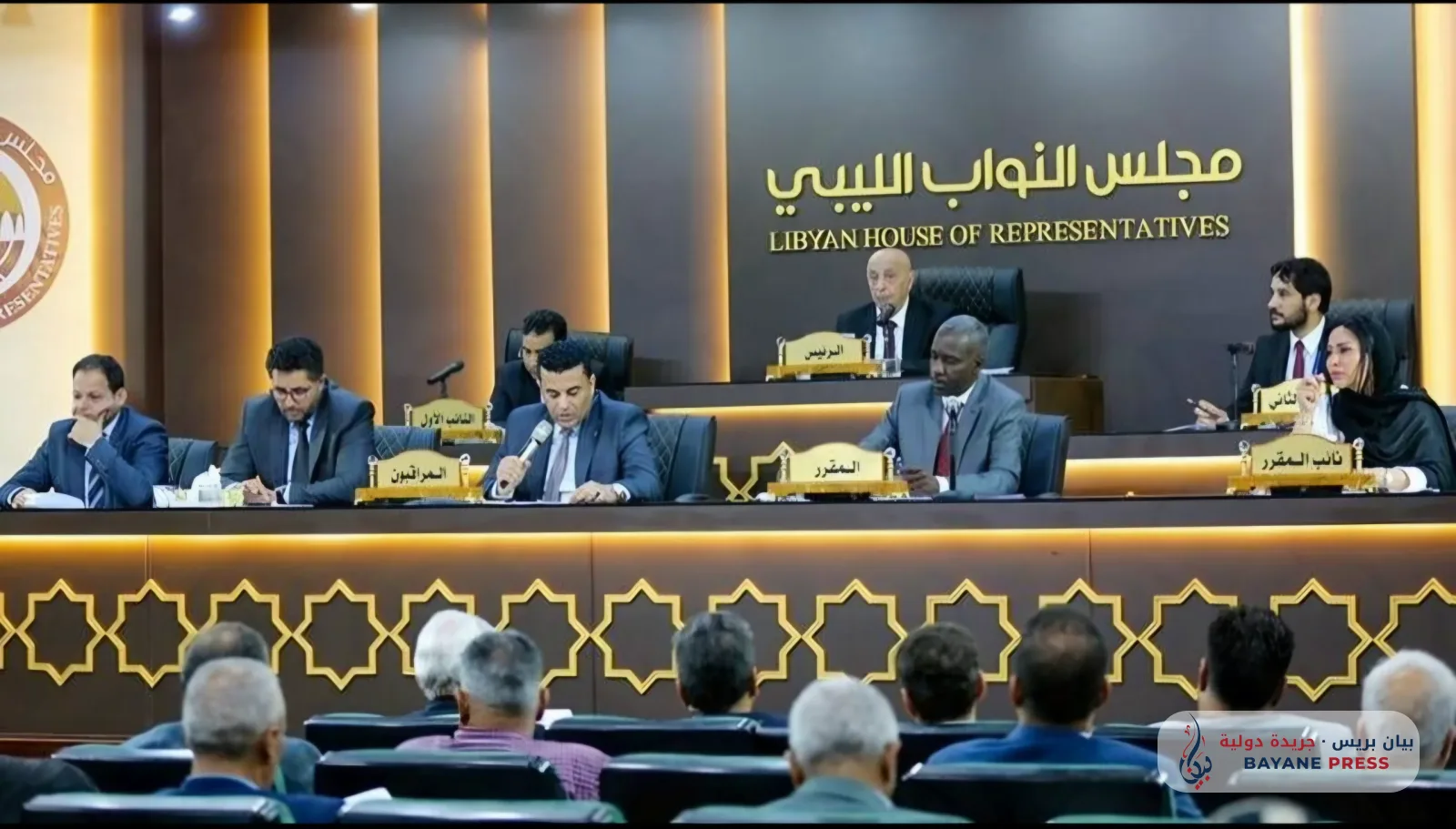
The Libyan political scene witnessed a notable development with the announcement by the House of Representatives of the adoption of the conscription and general mobilization law, approval for the establishment of an oil refinery in the south, and a decision regarding the leadership of the Central Bank of Libya, during an official session hosted in the city of Sabha on Monday, November 2, 2026, amid ongoing political, institutional, and economic challenges facing the country.
The session was chaired by Al-Salheen Abdel Nabi, with the attendance of the parliament's deputy speakers Tariq Al-Ashtar and Mesbah Douma—an event the council considered an important step towards expanding the presence of state institutions in the southern regions and responding to the developmental and economic demands of the area's residents.
According to the official spokesperson of the House of Representatives, Abdullah Bliheg, 82 out of 90 attending deputies voted in favor of the conscription and general mobilization law with amendments adopted, a legislative step related to regulating this field, while the practical details of the law's implementation and its practical effects remain tied to its final content and subsequent executive procedures.
On the economic front, the deputies unanimously approved the establishment of an oil refinery in southern Libya, responding to a memorandum submitted by representatives of the region, local officials, and notable figures and elders of Fezzan, which included demands related to development, services, and infrastructure.
The decision to build the refinery gains special significance given the strategic location of southern Libya and the oil resources and production areas it contains. If necessary funding and infrastructure are provided and the project is actually implemented, it could contribute to supporting local economic activity, creating job opportunities, improving oil refining capabilities, and providing petroleum derivatives.
The session's decisions did not stop at the military and oil sectors, but extended to the banking sector after 78 out of 90 deputies voted to accept the resignation of the former governor of the Central Bank of Libya and appoint Dr. Fawzi Abu Khuzam as the bank's governor, according to the council's announcement.
This decision comes in a sensitive context experienced by Libyan financial institutions, where the unity of monetary decision-making and the stability of the central bank remain among the most prominent issues linked to the management of public resources and financial policy control in the country. Furthermore, the parliamentary announcement of the appointment does not alone settle all issues related to institutional recognition and the mechanisms of handing over responsibilities.
These decisions reflect the House of Representatives' attempt to combine legislative, developmental, and financial dossiers during a single session, at a time when Libya faces intertwined challenges related to political division, institutional rebuilding, and achieving a more balanced distribution of investments among regions.
The most important test during the coming period remains the extent to which these decisions transition from parliamentary approval to actual implementation, especially regarding the oil refinery project and the ability of the concerned institutions to provide the conditions for its completion, thereby making economic development a lever for stability and improving the living conditions of Libyan citizens.

Comments (0)
No comments yet. Be the first to react!