

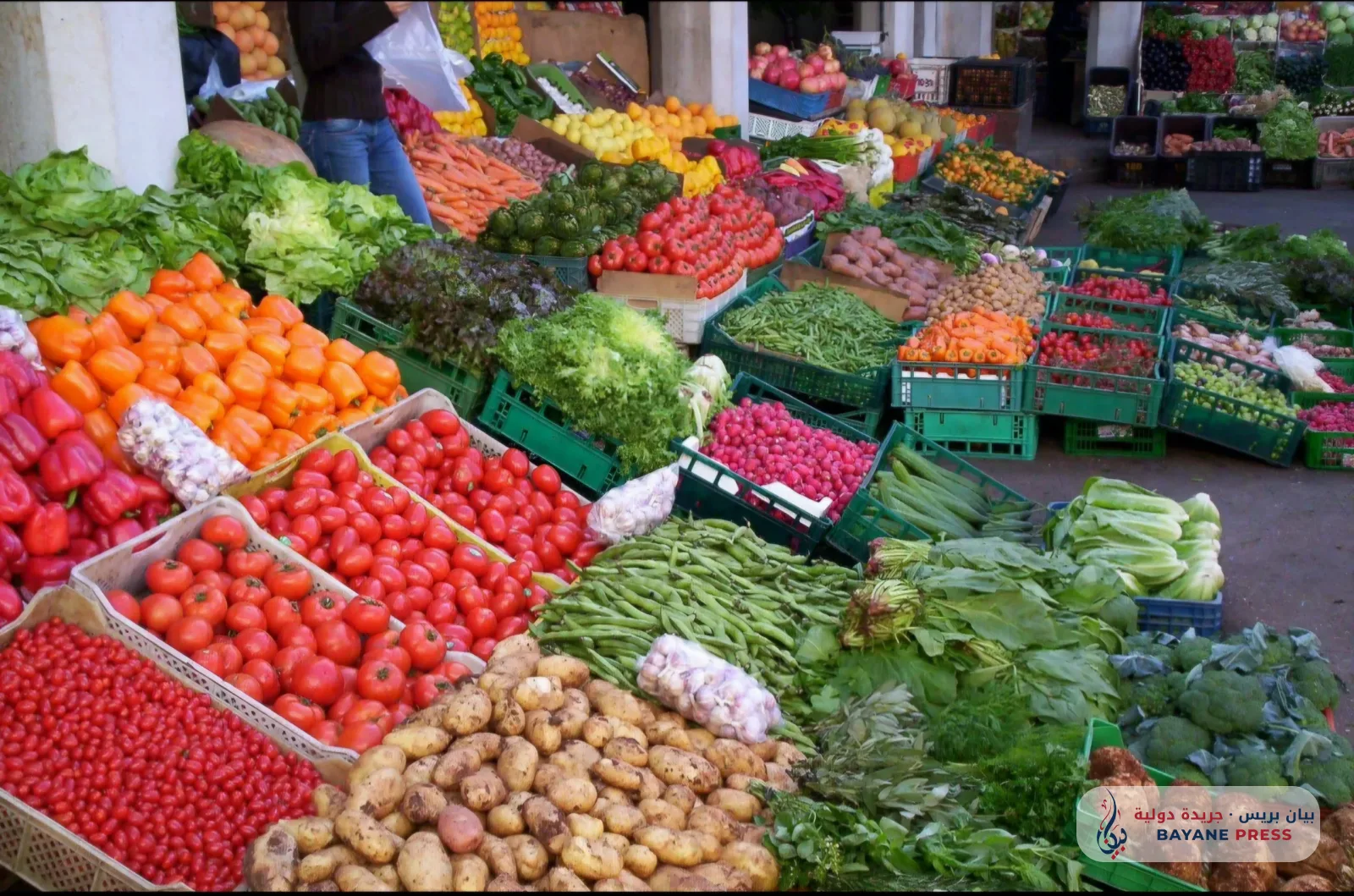
The specter of inflation has returned to the Moroccan economic landscape, as the latest official data revealed a rise in the prices of several basic commodities during October 2026, led by vegetables, meat, and fuel. This renews concerns regarding the impact of price volatility on household purchasing power, especially in light of income disparities and rising living costs.
The High Commission for Planning (HCP), in its note issued on Friday, November 20, 2026, stated that the Consumer Price Index recorded an increase of 1.9 percent compared to October of last year, and 0.8 percent compared to September, as a result of a 1.6 percent rise in food prices and a 0.3 percent increase in non-food items.
Vegetables topped the list of products with the highest monthly increase at 6.8 percent, followed by meat at 2.7 percent, then milk, cheese, and eggs at 0.7 percent, and coffee, tea, and cocoa at 0.3 percent. Conversely, prices for fish and seafood fell by 0.8 percent, without altering the upward trend of the general index.
The increases extended to fuel, with prices rising by 5 percent—a hike of significant economic importance given the link between energy costs and transport, production, and distribution, and the potential for additional pressure on the prices of goods and services.
The data showed a disparity in price trends between Moroccan cities, with Errachidia recording the highest monthly increase at 1.6 percent, followed by Settat at 1.4 percent, Guelmim and Beni Mellal at 1.3 percent, Marrakech at 1.2 percent, and Rabat at 1.1 percent, compared to a limited decrease in Al Hoceima of 0.3 percent.
On an annual basis, non-food prices rose by 3.1 percent, compared to 0.3 percent for food items, while the transport group recorded a notable increase of 11.6 percent. The core inflation index, which excludes highly volatile items and administratively set prices, rose by 1 percent over the year.
Although general annual inflation remains below 2 percent, the lower rate does not mean prices have returned to previous levels, but rather reflects the pace of change. Furthermore, the impact of inflation varies among households depending on their income level and the proportion allocated to food, transport, housing, and other essential expenses.
These indicators bring back to the forefront the challenge of balancing price stability with the protection of purchasing power, alongside the need to improve supply and distribution chains, reduce brokerage and transport costs, and strengthen oversight of illicit practices within markets. The economic challenge lies not only in controlling inflation rates but in ensuring that cumulative increases in the prices of basic goods do not become a permanent burden draining the budgets of Moroccan families.



Comments (0)
No comments yet. Be the first to react!