

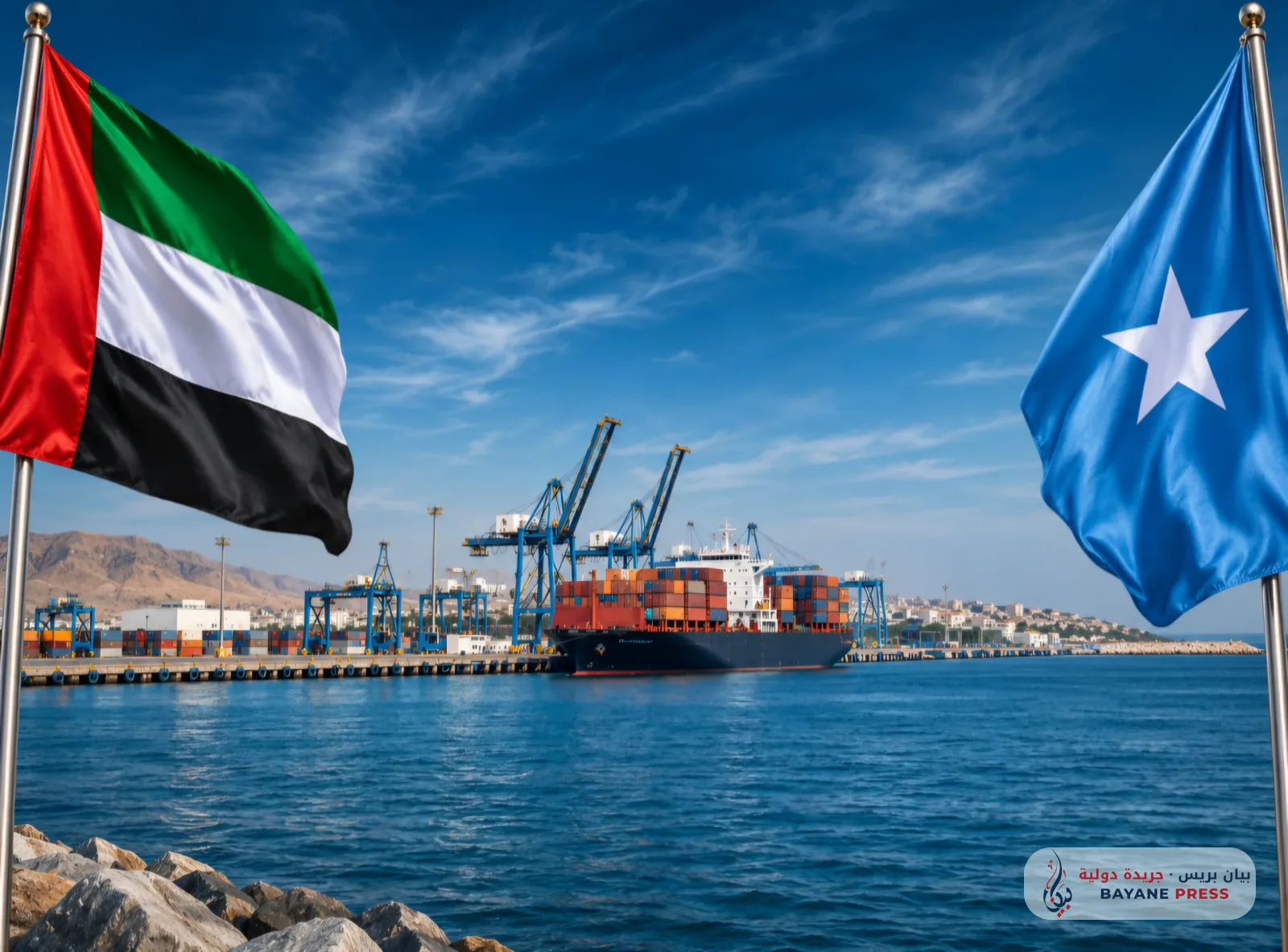
The diplomatic escalation between the UAE and Somalia, which reached its peak on Thursday, November 19, 2026, was not merely a passing crisis between two nations linked by economic and security interests. Instead, it revealed a complex conflict where national sovereignty, regional influence, and competition over strategic ports in the Horn of Africa intersect. While Mogadishu accuses Abu Dhabi of interfering in its internal affairs, the UAE maintains that Somali political disputes should not be used as a means to undermine bilateral relations or disrupt shared interests.
The latest confrontation began when the Somali government ordered the Emirati ambassador to leave the country within 72 hours and recalled its own ambassador to Abu Dhabi, following accusations by President Hassan Sheikh Mohamud that the UAE was supporting regional administrations and security forces outside the authority of the federal government. However, the roots of the crisis predate this decision, tracing back to disagreements over port development agreements in Berbera, Bosaso, and Kismayo, and the direct relations Abu Dhabi has established with the administrations of Somaliland, Puntland, and Jubaland.
Mogadishu considers the signing of economic and security agreements with these administrations without its consent to be an overreach of the federal state's authority. Conversely, the Emirati presence is tied to long-term commercial and logistical projects, most notably the investment by DP World in the port of Berbera, under an agreement concluded in 2016 with targeted contractual investments amounting to $442 million. The sensitivity of these projects lies in their location near the Gulf of Aden and the Bab el-Mandeb Strait, where vital shipping lanes connecting Asia to Europe pass, making the control and management of port infrastructure an economic and security issue that transcends Somali borders.
The dispute became more complex following Israel's recognition of Somaliland in December 2025, as Mogadishu accused the UAE of playing a role in facilitating that recognition. Allegations were also raised regarding the use of the port of Berbera for the transit of a Yemeni separatist figure in January 2026 without the federal government's permission. These accusations remain in need of independent evidence to verify their details, especially since commercial relations with regional administrations do not automatically imply political recognition of their secession or involvement in their military activities.
Amidst this tension, the history of humanitarian and security cooperation between the two countries cannot be overlooked. The UAE has contributed to training Somali security personnel and supporting counter-terrorism efforts, in addition to providing aid during droughts and floods, including the delivery of more than six thousand tons of food supplies in 2022, and approximately 700 additional tons in early 2025 to support affected populations. This cooperation reflects a relationship that extends into areas beyond commercial interests, without negating the right of both parties to discuss their political and legal differences.
The Emirati response rejected what Abu Dhabi described as the escalatory approach of the Somali government, emphasizing the necessity of not involving state-to-state relations in internal political conflicts. The UAE Ministry of Foreign Affairs revealed that its embassy in Mogadishu had already been closed and its diplomatic staff withdrawn since January 2026, following the Somali government's decision to cancel bilateral cooperation agreements, which gives the recent expulsion order an additional political and symbolic dimension.
At the geopolitical level, the crisis transcends the bilateral dispute to international competition over the Horn of Africa, where the interests of Gulf states, Turkey, Ethiopia, and other international powers intersect in a region that controls the entrances to the Red Sea. Therefore, interpreting Emirati moves as purely political interference ignores the nature of the existing commercial and security interests, just as the importance of these interests does not exempt all parties from respecting sovereign and legal arrangements.
At its core, the crisis reveals a deep disagreement over which entity is authorized to manage external partnerships within the Somali state, more than it reveals an inevitable rupture between the two peoples. The ports that form the center of the tension could become bridges for cooperation if an understanding can be reached that guarantees the authority of the federal government and protects existing investments. As for the continued escalation, it may open the door to further polarization in a region that cannot afford additional instability.



Comments (0)
No comments yet. Be the first to react!