

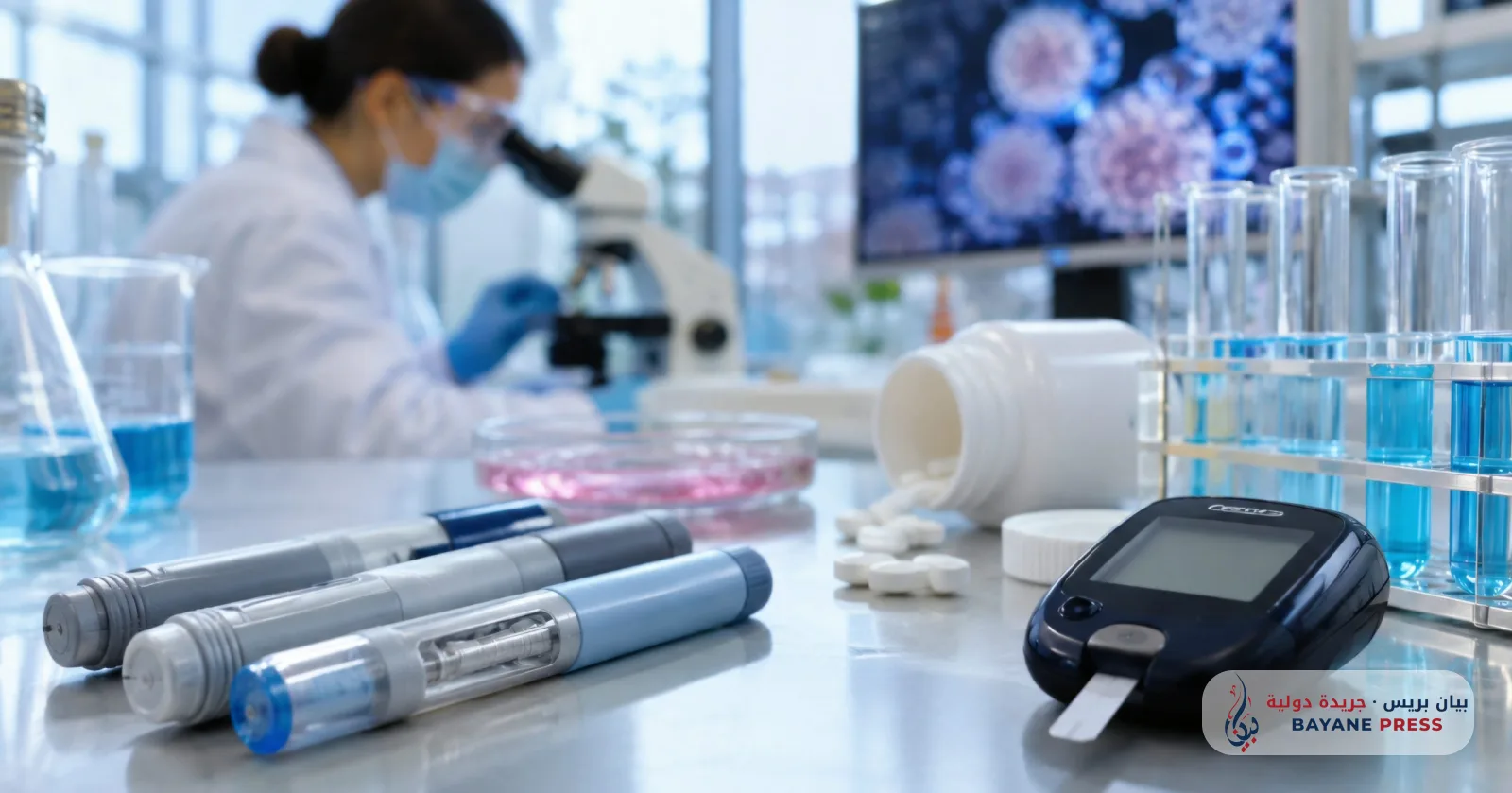
Modern medicine is undergoing a rapid transformation in the field of diabetes treatment, as scientific research in 2026 has yielded a new generation of drugs and therapeutic technologies. Their goals are not limited to controlling blood sugar levels, but extend to reducing the number of injections, improving weight management, preserving the body's ability to produce insulin, and even attempting to replace damaged pancreatic cells.
Among the most notable medical achievements recorded this year was the approval by the U.S. Food and Drug Administration (FDA) on March 26, 2026, of the drug "Awiqli," which contains the long-acting insulin "icodec." It is administered via a single weekly injection instead of daily basal insulin injections.
This innovation represents a significant development for patients with type 2 diabetes who require basal insulin, as it allows for the reduction of the number of injections of this type of insulin from 365 to about 52 per year, without necessarily eliminating other injections the patient may require.
On October 23, 2026, U.S. health authorities expanded the drug's approval to include children and adolescents with type 2 diabetes, starting from the age of ten, making it the first weekly insulin approved in the United States for this age group.
Furthermore, on September 23, 2026, U.S. authorities approved another weekly insulin under the trade name "Onswic," containing the active ingredient "insulin efsitora alfa," to improve glycemic control in adults with type 2 diabetes.
Despite the advantages these drugs offer, their use requires careful medical monitoring due to the potential for severe drops in blood sugar levels, as well as risks associated with dosage errors. Therefore, switching from daily to weekly insulin or adjusting dosages should not be done without the supervision of a specialist physician.
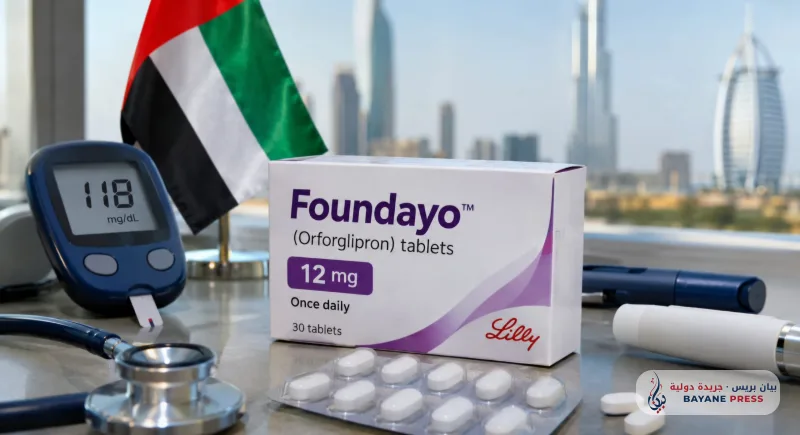
Regarding oral treatments, the drug "orforglipron," known commercially as "Foundayo," has emerged. It is a drug that activates GLP-1 hormone receptors and is characterized by the possibility of being taken as a daily tablet, without the need for fasting or adhering to meal times.
This drug works by enhancing insulin secretion in response to rising blood sugar levels and limiting glucagon secretion, in addition to influencing appetite centers in the brain, which helps increase the feeling of fullness and control weight.
The U.S. Food and Drug Administration approved this drug on April 1, 2026, for weight management in specific groups of adults, while Britain became the first European country on August 10 to grant it authorization for the treatment of type 2 diabetes and weight management.
On October 15, the Committee for Medicinal Products for Human Use (CHMP) of the European Medicines Agency recommended granting it authorization for the treatment of type 2 diabetes and weight management in adults; however, this regulatory recommendation does not in itself constitute final authorization.
Drugs in this class may be associated with side effects including nausea, vomiting, diarrhea, constipation, and abdominal pain, as well as less common but potentially serious risks such as pancreatitis, gallbladder issues, and dehydration. The risk of hypoglycemia may also increase when used in conjunction with insulin or other glucose-lowering medications.
Among the innovations attracting the attention of the medical community is the drug "retatrutide," which relies on a triple therapeutic mechanism targeting GLP-1, GIP, and glucagon receptors, which are involved in regulating blood sugar, appetite, and energy metabolism.
Results from a Phase 3 clinical trial, involving 1,152 adults with type 2 diabetes and obesity or overweight, showed the ability of this experimental drug to reduce weight and improve blood sugar control.
After 80 weeks, the average weight loss in the group that received the highest dose was about 18.8 percent, according to one statistical analysis method published in the medical journal "The Lancet," compared to 5.1 percent in the group that received a placebo. The figure reached 20.8 percent according to another analysis that estimates the effect of the treatment assuming participants continued to receive it according to the specified protocol.
These results do not mean that all patients will achieve the same percentages, and retatrutide remains an experimental, unapproved treatment; it should not be purchased from websites or used outside of licensed clinical settings.
In the field of type 1 diabetes, which arises as a result of the immune system attacking insulin-producing cells within the pancreas, research has moved toward developing treatments that target the immune mechanism causing the disease, rather than just compensating for insulin deficiency.
On June 12, 2026, the U.S. Food and Drug Administration granted accelerated approval to expand the use of the drug "teplizumab," known commercially as "Tzield," to help slow the decline of natural insulin production in children and adolescents aged eight to 17 years who have been recently diagnosed with stage 3 type 1 diabetes.
The drug had previously received authorization to delay the progression of the disease from stage 2 to stage 3, which is accompanied by blood sugar levels that meet clinical diagnostic criteria, in specific patient groups.
This treatment relies on modulating the activity of certain immune cells responsible for attacking insulin-producing cells, with the aim of preserving their remaining functional capacity for as long as possible.
However, this treatment does not represent a definitive cure for diabetes, nor does it eliminate the need for insulin. It also requires specialized medical monitoring due to the potential for a decrease in white blood cell counts, an increased risk of infection, and the reactivation of certain viruses, which may lead to serious complications in certain cases.
In another research path, scientists continue to develop treatments based on converting stem cells into pancreatic cells capable of producing insulin, and then transplanting them into patients with type 1 diabetes to replace the cells destroyed by the immune system.
One of the most prominent of these projects is the experimental treatment "Zymislicil," for which an early study published in the "New England Journal of Medicine" showed promising results regarding its ability to restore insulin production.
Ten out of twelve participants who received the full dose in the study were able to discontinue external insulin one year after treatment. However, the limited number of participants, the short duration of follow-up, and the need for immunosuppressive drugs necessitate caution in interpreting these results.
A recent scientific review, published on November 23, 2026, confirmed that research related to insulin-producing cells derived from stem cells opens important horizons for diabetes treatment, but their widespread use remains linked to overcoming challenges related to safety, rejection of transplanted cells, and their long-term effectiveness.
This development reflects the gradual shift of medicine toward more personalized treatments that take into account the type of diabetes, the patient's age, weight, heart and kidney function, and response to treatment, while considering the benefits and risks associated with each drug.
Despite the hopes these innovations bring, balanced nutrition, physical activity, regular monitoring of blood sugar levels, and medical follow-up remain fundamental pillars in managing the disease and preventing its complications.
Between weekly insulin, modern tablets, immunotherapies, and cellular engineering, science is nearing a change in the lives of millions of people with diabetes, yet reaching a definitive, safe, and accessible cure for all patients remains a scientific goal that has not yet been fully achieved.


Comments (0)
No comments yet. Be the first to react!