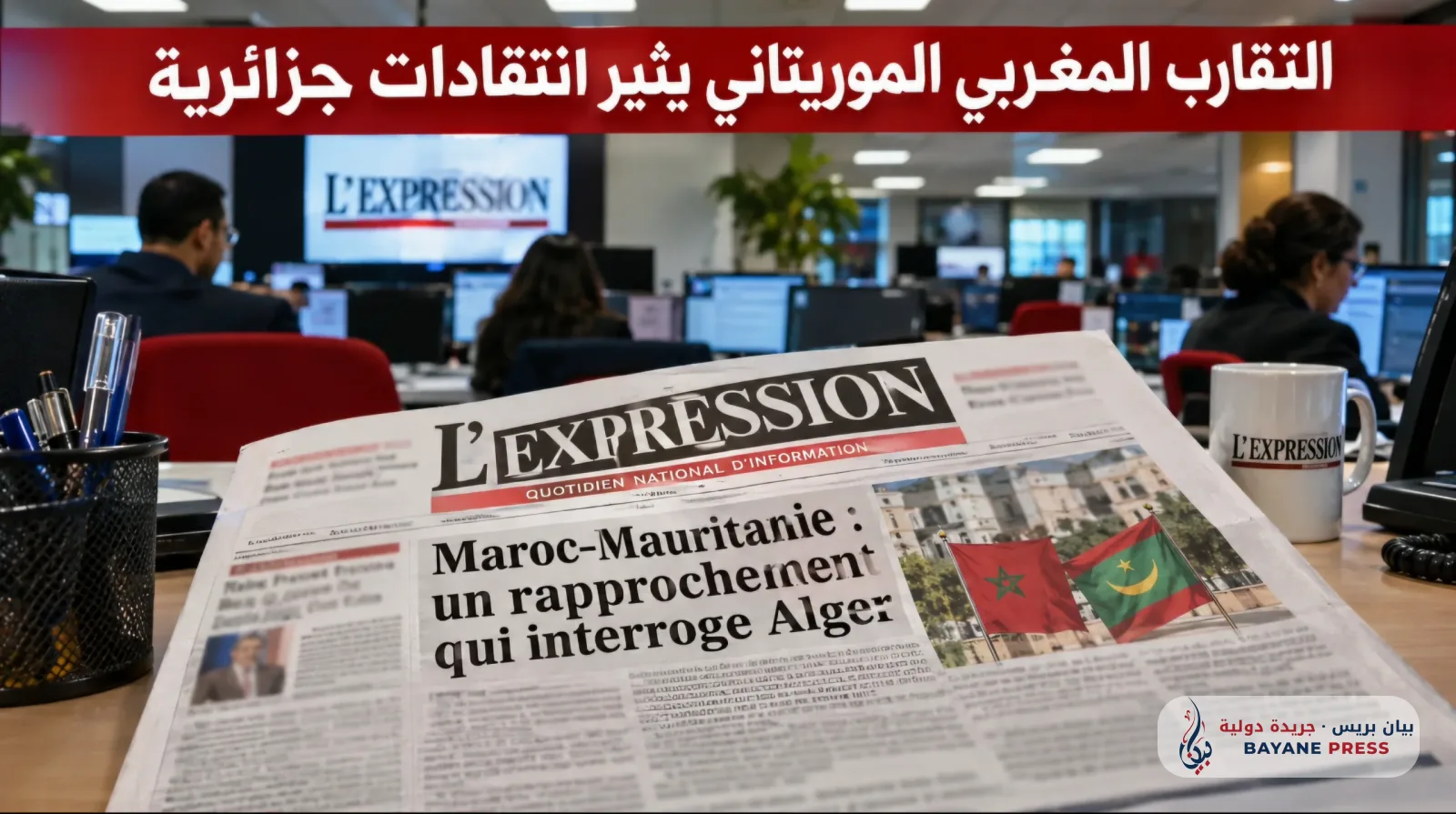
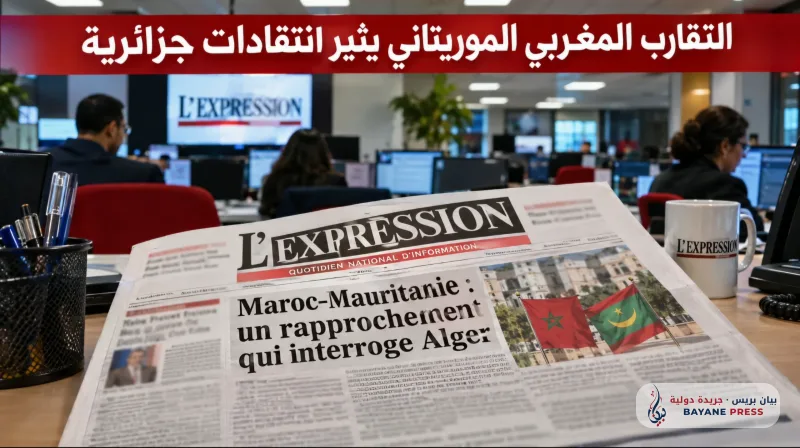
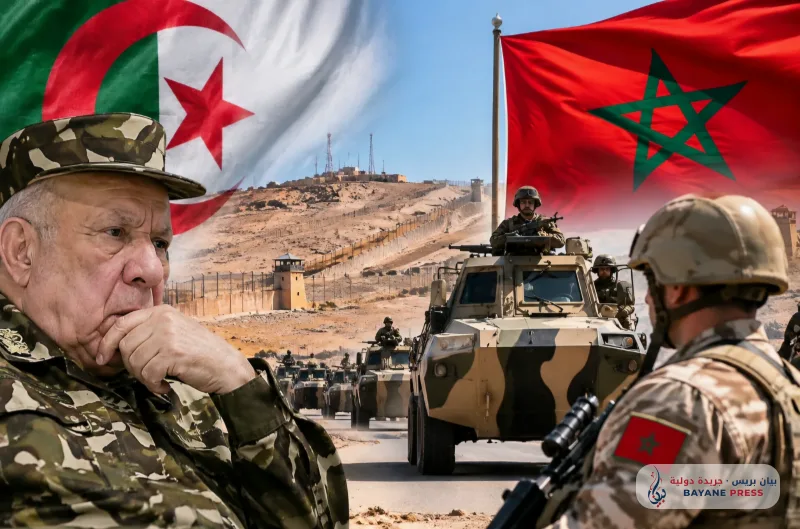
The Algerian newspaper 'L'Expression', on page fifteen of its Sunday, November 29, 2026 edition, published an analytical article on Moroccan-Mauritanian relations, containing sharp criticisms of Moroccan diplomatic maneuvers regarding the Sahara issue, as well as several political positions expressed by Mauritanian figures.
The author of the article, Redouane Malek, presented by the newspaper as a consultant in geopolitical affairs, accused Rabat of seeking to push Nouakchott toward adopting a position favorable to the Moroccan approach for resolving the conflict.
The author based his argument on a previous article by Mauritanian Minister Sidi Mohamed Ould Maham, in which he called on the Sahrawis to deal with the existing political reality—a call that sparked criticism from the Algerian writer, who viewed it as contrary to the historical trends of Mauritanian diplomacy.
The article recalled key moments in the history of Mauritania's involvement in the Sahara conflict, starting with its military participation in 1975, through the signing of the peace agreement with the Polisario Front on August 5, 1979, to its recognition of the Front as a representative entity in 1984.
The author defended the continuation of the policy of positive neutrality adopted by Mauritania, arguing that developing its economic and security relations with Morocco should not lead to a change in its political stance on the conflict.
However, the article provided no documents or official Mauritanian statements proving that Rabat is exerting pressure on Nouakchott, nor did it include data confirming an actual shift in the official Mauritanian position.
This rhetoric comes in the context of a widening regional debate regarding the future of the Sahara issue and the diplomatic shifts it is witnessing, coinciding with the growing importance of Moroccan-Mauritanian relations in the fields of trade, transport, security, and the connection between North Africa and its African depth.
Beyond the accusations contained in the article, the development of relations between Rabat and Nouakchott remains a sovereign matter governed by the common interests of both countries, and the personal positions of some politicians cannot be considered evidence of a change in the official orientation of the Mauritanian state.
The content of the article reflects the sensitivity of the Moroccan-Mauritanian rapprochement within Algerian media discourse, without providing sufficient evidence for the accusations leveled against Moroccan diplomacy.
Comments (0)
No comments yet. Be the first to react!