

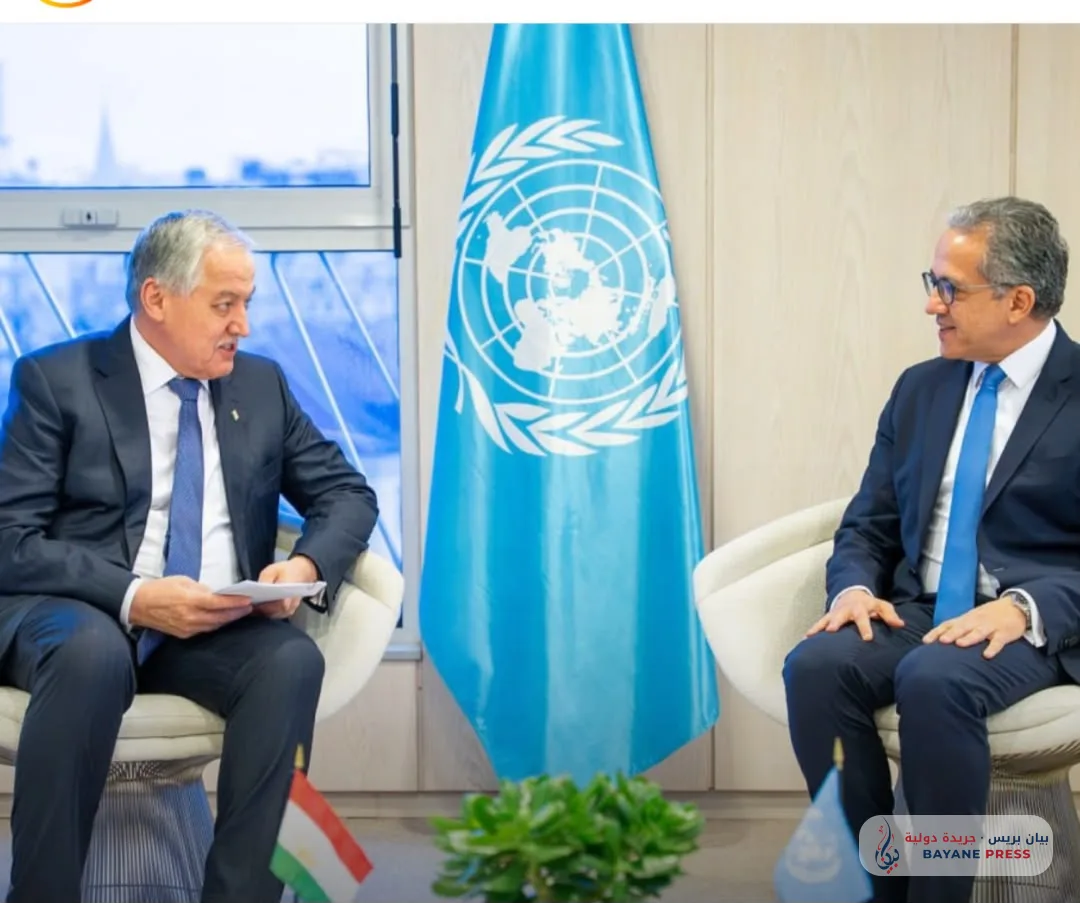
Tajikistan showcases rare manuscripts and cultural treasures in celebration of the contributions of two of humanity's greatest intellectual figures.
Paris, November 29, 2026:
The United Nations Educational, Scientific and Cultural Organization (UNESCO) hosted at its headquarters in the French capital, Paris, two international scientific conferences on the intellectual and scientific legacy of the great scholars Abu Ali Ibn Sina (Avicenna) and Omar Khayyam. The event saw the participation of a select group of scientists, researchers, academics, and specialists from universities and research institutions worldwide, held at the initiative of the Government of the Republic of Tajikistan.
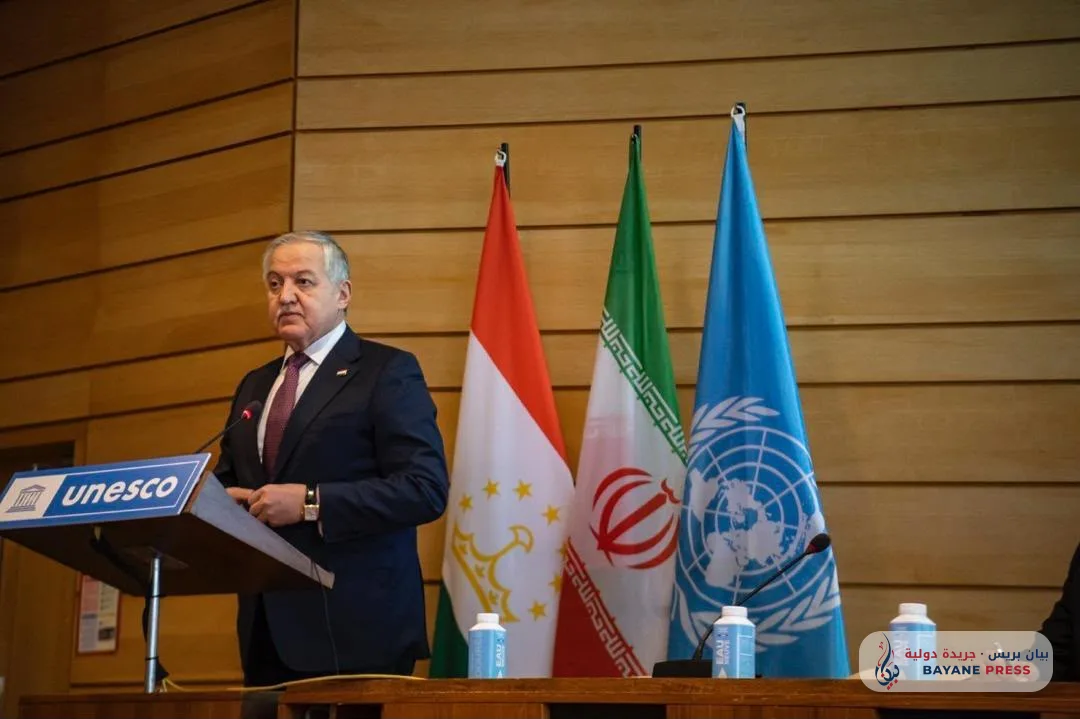
These two conferences were held the day before yesterday at the initiative of the Government of the Republic of Tajikistan, with its delegation led by His Excellency Sirojiddin Muhriddin, Minister of Foreign Affairs of Tajikistan.
The first conference, titled "Abu Ali Ibn Sina and His Contributions to Shaping a New Scientific Vision of the World," addressed his status in the history of human and natural sciences, his contributions to philosophy, medicine, astronomy, mathematics, psychology, and social sciences, as well as his role in enriching human thought and strengthening communication between philosophical and scientific schools in the East and West.
The conference aims to highlight Avicenna's intellectual and scientific legacy, providing a platform for dialogue between researchers and specialists from around the world to study his works, interpret his philosophical, medical, scientific, and humanistic ideas, and explore their impact on the development of contemporary knowledge and science.
Participants discussed a number of his major works, including "The Book of Healing" (Kitab al-Shifa), "The Canon of Medicine" (Al-Qanun fi al-Tibb), "The Book of Salvation" (Kitab al-Najat), "Daneshnameh-ye Ala'i," and "Remarks and Admonitions" (Al-Isharat wa al-Tanbihat). Discussions also covered his contributions to philosophy, logic, ethics, the scientific method, medicine, psychology, and natural and mathematical sciences, as well as his educational and social ideas and his role in developing scientific and philosophical terminology in the Tajik and Persian languages and their influence on other languages.
The conference also explored ways to develop specialized studies on Avicenna's heritage at both regional and international levels, and to strengthen cooperation between researchers and scientific institutions involved in translating and publishing his works, as well as studying aspects that have not yet received sufficient research, contributing to the application of his ideas and achievements in enriching contemporary human knowledge.
In the context of celebrating Tajik and Persian scientific and cultural heritage, an exhibition of books, manuscripts, arts, and cultural heritage was opened at UNESCO headquarters the day before yesterday in honor of Avicenna and Omar Khayyam. The opening was attended by His Excellency Sirojiddin Muhriddin, Minister of Foreign Affairs of the Republic of Tajikistan, who emphasized that organizing the exhibition at the international organization's headquarters reflects the central importance of science and culture in strengthening international relations and consolidating the values of friendship, respect, and dialogue between peoples.
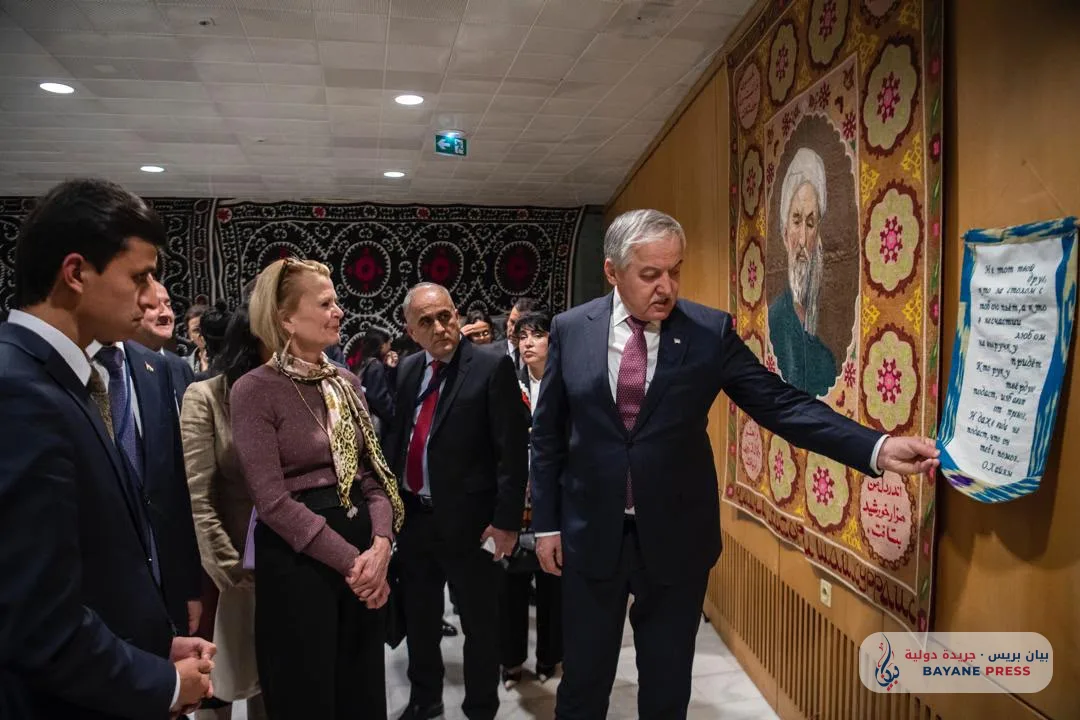
He stated that scientific and cultural heritage does not merely represent a record of the historical journey of nations, but constitutes one of the most important means of communication and dialogue between civilizations, noting the importance of preserving manuscripts and intellectual heritage and passing them on to new generations as a fundamental pillar for maintaining cultural identity and historical knowledge.
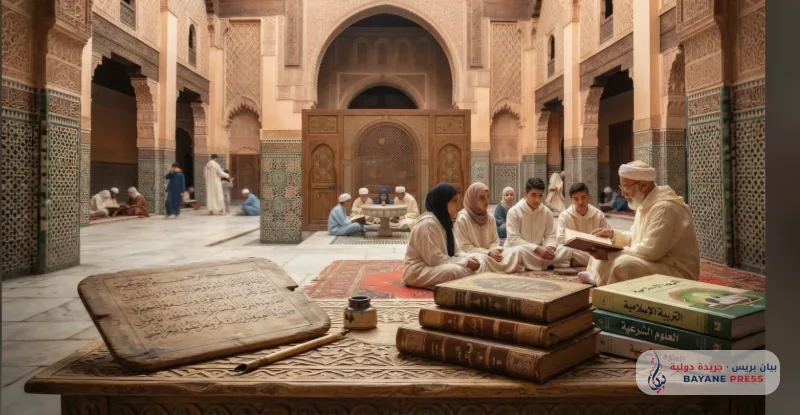
The exhibition features a collection of rare manuscripts and lithographed books, Avicenna's scientific, philosophical, and medical works, as well as collections of Omar Khayyam's quatrains (Rubaiyat), artistic calligraphic works embodying his poetry, and examples of Tajik handicrafts, including wood inlay and traditional embroidery, and commemorative medals bearing Avicenna's image. Some of the historical exhibits date back to the period between the fifteenth and nineteenth centuries.
The Tajik Foreign Minister affirmed that the immortal legacy of Avicenna and Omar Khayyam is a source of pride for the Tajik and Persian people, and constitutes a shared intellectual and human wealth that has contributed to enriching world civilization. He expressed his appreciation to UNESCO, the Rudaki Society, and all parties that contributed to organizing the exhibition, emphasizing the importance of continued cooperation in preserving and promoting cultural and historical heritage at the international level.
The events continue with the second international scientific conference titled "The Scientific and Literary Legacy of Omar Khayyam: Global Significance and Contemporary Research," which focuses on Khayyam's contributions to philosophy, mathematics, geometry, astronomy, medicine, and music theory, in addition to studying his poetic and intellectual works using modern research methods.
Omar Khayyam is considered one of the most prominent scientists of the eleventh century, with his name linked to significant scientific achievements, most notably the development of the Jalali calendar under his supervision at the Isfahan Observatory during the reign of the Seljuk Sultan Malik-Shah, in addition to his contributions to mathematics, geometry, and philosophy. He also gained wide international fame thanks to his poetic quatrains, which spread in Europe during the nineteenth century after being translated into English by Edward FitzGerald.
The Khayyam conference discussed three main themes, including his philosophy and vision of existence, nature, and rational thought; his contributions to Tajik and Persian language and literature and the influence of his quatrains on world literature; as well as his achievements in exact and natural sciences, particularly mathematics, astronomy, medicine, and music theory.
The conference also aims to document Khayyam's scientific and literary works, publish their collections in the Tajik language and translate them into international languages, prepare a comprehensive bibliographic reference on his life and works, and encourage new academic research, in addition to introducing rare historical manuscripts by scholars of philosophy, mathematics, and astronomy.
The two conferences were attended by specialists from regional and international research and scientific institutions, professors, lecturers, and university students, as well as researchers and those interested in the scientific and intellectual heritage of the two scholars. The sessions are being held in Tajik (Persian), Russian, English, and French.
These scientific and cultural events embody the Republic of Tajikistan's commitment to highlighting the contributions of Tajik and Persian civilization figures to the progress of human knowledge, strengthening the presence of their scientific and intellectual heritage in international forums, consolidating the role of science and culture in building bridges of communication and dialogue between civilizations, and preserving the shared historical memory for future generations.


Comments (0)
No comments yet. Be the first to react!