

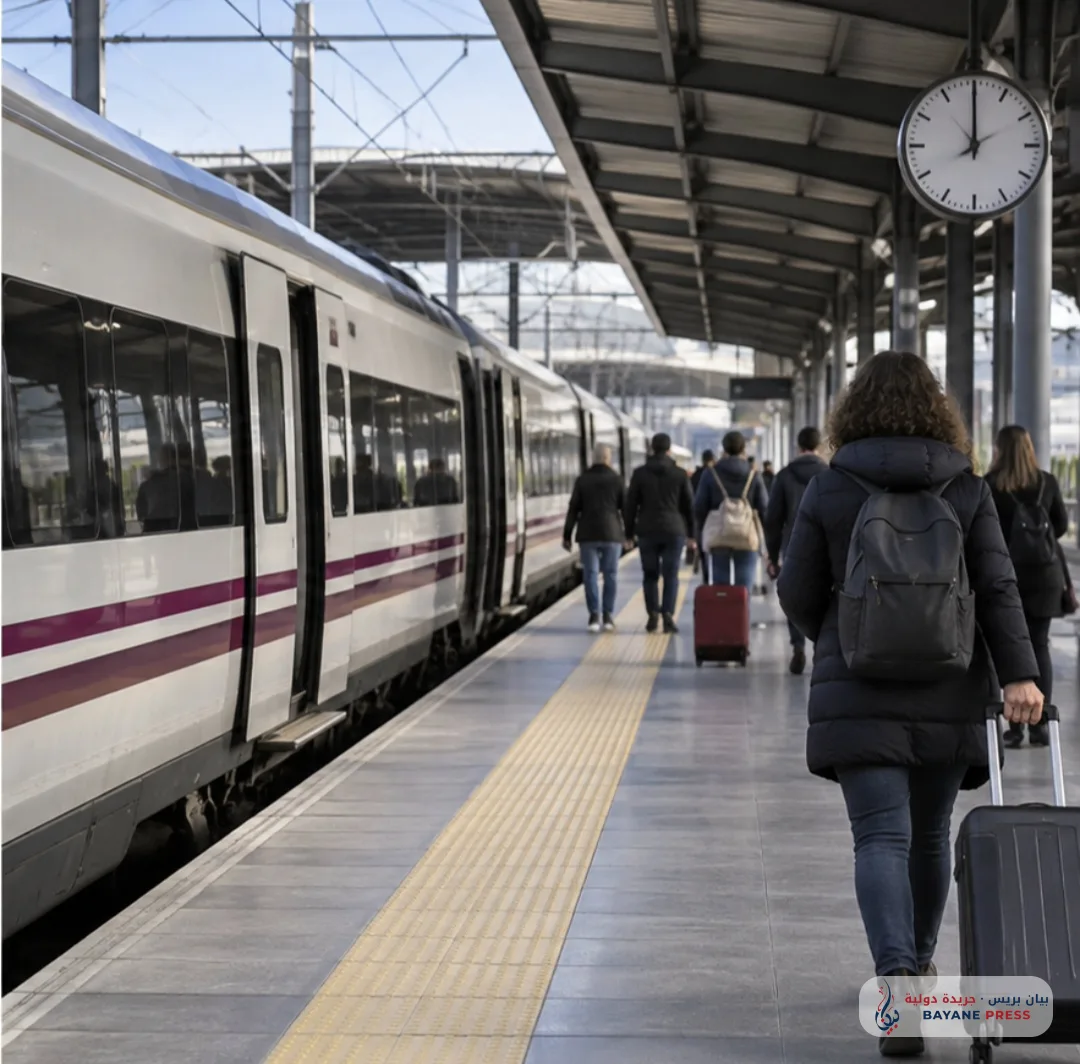
Spain is bracing for widespread disruptions in rail transport as a national strike approaches on Tuesday, November 17, 2026, involving the state-owned "Renfe" group and other sectors of the rail transport system, amid ongoing disputes between unions and authorities regarding professional safety standards and operating conditions.
The strike is scheduled to last twenty-four hours, starting from midnight on Tuesday, with the participation of prominent trade union organizations, including train driver unions, the General Workers' Union (UGT), and Workers' Commissions (CCOO), in a move aimed at pressuring for improved safety conditions and strengthening human resources, maintenance, and oversight of the rail network.
This escalation follows serious incidents in the Spanish rail sector, particularly the Urda accident in the Toledo region on October 28, which brought union demands for a review of preventive measures, operational procedures, and increased safety levels back to the forefront.
The Spanish Ministry of Transport has announced the adoption of mandatory minimum services, guaranteeing the operation of 75 percent of commuter trains during peak hours and 50 percent off-peak, compared to 65 percent of medium-distance services, 72 percent of high-speed and long-distance trains, and 26 percent of freight services.
The repercussions of the expected strike are not limited to Renfe, as protest measures extend to sectors linked to the rail infrastructure operator "Adif," as well as affecting the services of high-speed train operators "Iryo" and "Ouigo."
In an attempt to avoid a partial paralysis of transport, the Spanish Ministry of Transport continues its contacts with union representatives, having proposed measures to improve safety systems and risk management, including the use of an expert committee to assess the sector's conditions.
The implementation of the strike remains linked to the outcome of ongoing negotiations, while travelers face the possibility of flight cancellations and schedule adjustments, requiring them to check company updates before heading to stations, especially for those who rely on trains for their daily commutes between Spanish cities.




Comments (0)
No comments yet. Be the first to react!