

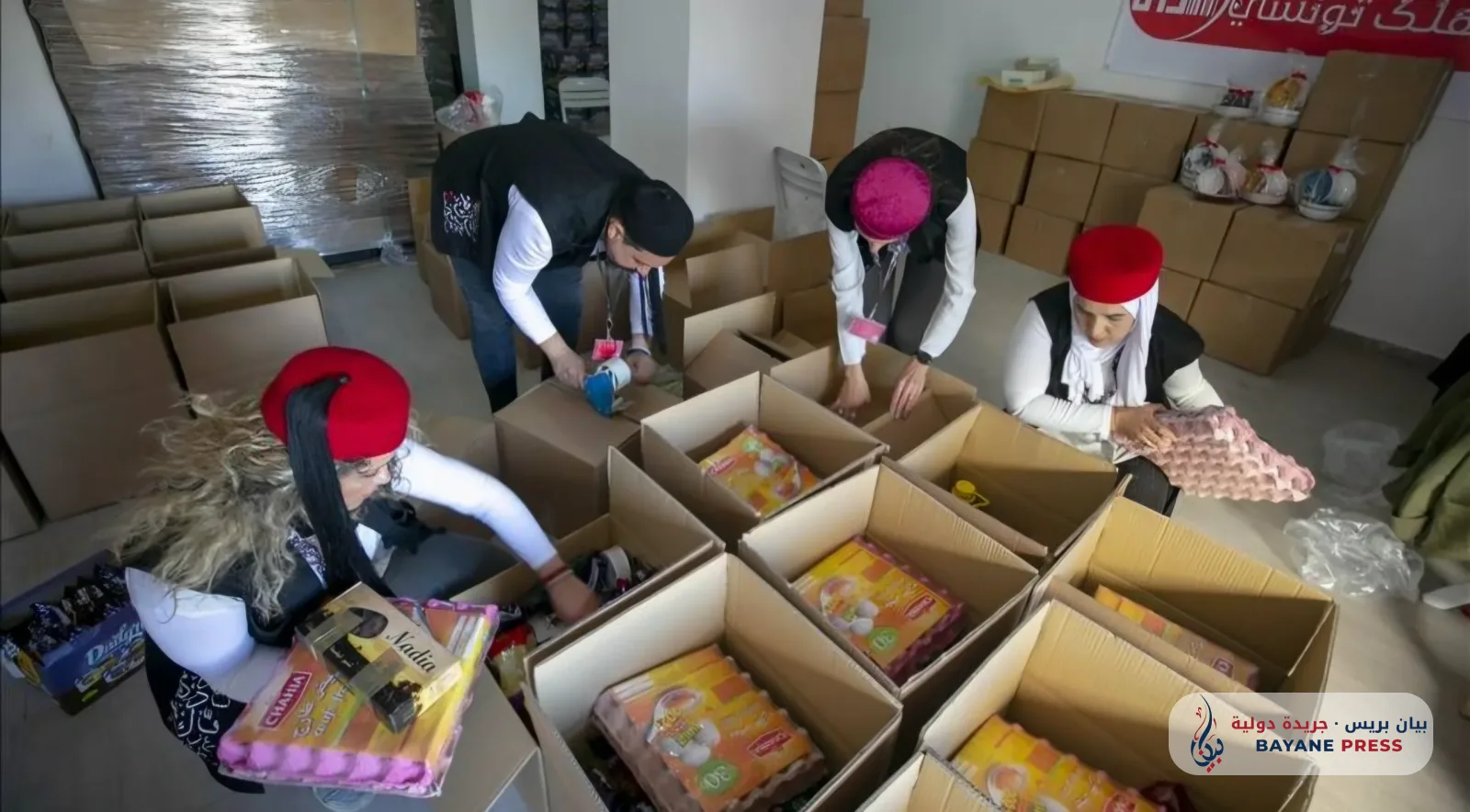
The Gammarth region, in the northern suburbs of the Tunisian capital, is hosting on November 24 and 25, 2026, the second edition of the Arab-African Conference on Food Security and Food Waste Reduction, with the aim of strengthening regional cooperation and developing practical solutions for challenges related to agricultural production and food supply.
The conference is organized by the Tunisian Food Bank Association and the Arab and African Women's Organization, with the participation of the League of Arab States, the Food and Agriculture Organization of the United Nations (FAO), and the Regional Food Bank Network, alongside representatives from government institutions and civil society organizations, with an expected attendance of about 200 participants.
The conference program focuses on developing sustainable agriculture, employing technology and innovation to improve productivity, and encouraging investments and partnerships capable of strengthening the stability of food supplies, as well as reducing losses recorded during production, storage, transport, and distribution stages.
The meeting pays particular attention to empowering women and youth in the agricultural sector by supporting productive initiatives and encouraging projects that contribute to the development of rural areas, creating job opportunities, and improving the economic and social conditions of their inhabitants.
The importance of these initiatives is increasing in light of the challenges facing many Arab and African countries, as a result of climate change, water scarcity, successive waves of drought, rising production costs, and volatile prices of basic commodities in international markets.
Reducing food waste represents one of the most prominent themes of the conference, given the economic and environmental losses resulting from the disposal of food fit for consumption, and the subsequent depletion of water resources, energy, and agricultural land.
The conference proceedings are expected to provide an opportunity to discuss more effective mechanisms for recovering surplus food and redistributing it to those in need, and to enhance coordination between producing institutions, food banks, and associations, ensuring that available resources are utilized in accordance with health safety standards.


Comments (0)
No comments yet. Be the first to react!