

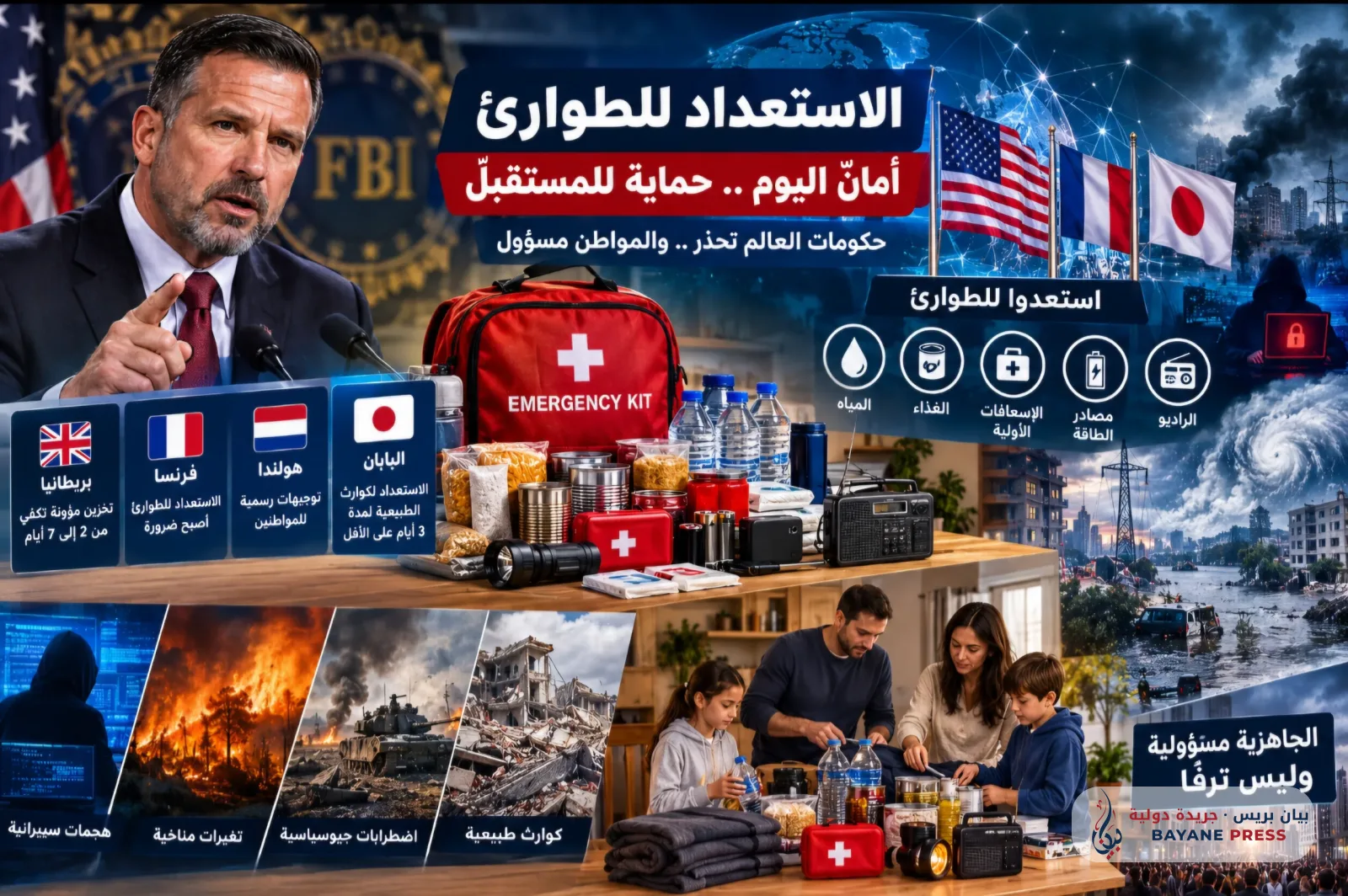
In a scene reflecting growing regional and international concern over supply chain security and the stability of critical infrastructure, a successive wave of official and popular calls has emerged recently, urging citizens around the world to proactively prepare for sudden crises and emergencies. The latest of these came from warnings issued by former FBI Deputy Director Dan Bongino, who called on American citizens to remedy the situation and equip themselves with basic necessities in anticipation of any sudden emergency. This coincides with explicit governmental recommendations and security guidelines in several major Western and Asian countries, such as Britain, France, and Japan, to secure self-provisioning and temporary self-reliance during critical times. This once again brings the culture of disaster response and crisis management in the modern era into sharp focus amidst mounting cyber, environmental, and interconnected geopolitical challenges. The former American security official stressed during statements on his media platforms that complacency in taking simple preventive measures could put families in a real predicament in the event of any sudden interruption in essential services such as electricity, water, or communication means. He emphasized the importance of storing adequate quantities of safe drinking water, canned or dried foods that do not require complex cooking, in addition to first aid supplies, alternative power sources, and portable radios to stay informed about developments in the absence of internet and traditional communication networks. These directives directly intersect with national campaigns launched by several European governments, such as the British, French, and Dutch governments, which have publicly and repeatedly urged their populations to keep enough provisions and basic medical supplies to last between two and seven days as a routine precautionary measure that enhances community resilience in absorbing sudden shocks—especially amid growing threats linked to potential cyberattacks targeting energy networks and vital services, or the repercussions of severe climate fluctuations and escalating global geopolitical turmoil casting a dark shadow over market stability and international trade. In the same context, a country like Japan was not isolated from this global trend, as official authorities concerned with disaster management and emergency response announced intensive plans and precise awareness programs aimed at motivating families to review their preparedness and store basic emergency supplies for no less than three full days, with a focus on constant readiness to face usual natural disasters such as earthquakes and devastating tremors. This reflects an implicit consensus among various regimes and security apparatuses around the world on the need to transition from the stage of reactive response to the stage of proactive anticipation and comprehensive strategic readiness at the level of individuals and groups. Crisis management experts believe that societal awareness and organized, deliberate preparation represent the first line of defense to minimize mass panic and hysteria, which often exacerbate human and material losses when disasters strike. Furthermore, having a simple strategic stockpile inside every home gives state apparatuses and government rescue teams sufficient space and time to intervene rapidly and rehabilitate damaged infrastructure without additional pressure resulting from random rushes toward markets and commercial centers. Undoubtedly, these successive warnings issued by prominent security figures and adopted by major governments confirm beyond a doubt that the world is entering a delicate phase requiring the highest degrees of vigilance and individual and collective responsibility. Emergency preparedness is no longer a mere luxury or redundant measure, but has become an imperative necessity dictated by the requirements of the modern era and the rapid transformations witnessed by the entire international system. This calls for citizens everywhere to take these directives with serious consideration and work to apply them calmly and rationally, far from exaggerated alarmism or excessive dismissal of potential risks.
Escalating International Warnings to Prepare for Sudden Emergencies
In a scene reflecting growing regional and international concern over supply chain security and the stability of critical infrastructure, a successive wave of official and popular calls has emerged recently.

By
3 min read




Comments (0)
No comments yet. Be the first to react!