There are nations that exhaust their strength talking about themselves, and there are nations that build their strength away from the noise of the podiums, leaving it to history, the field, and facts to define them. Perhaps the greatest mistake one can make when speaking about Morocco is to interpret its silence as weakness, its balance as hesitation, and its openness to international partnerships as an inability to protect itself.
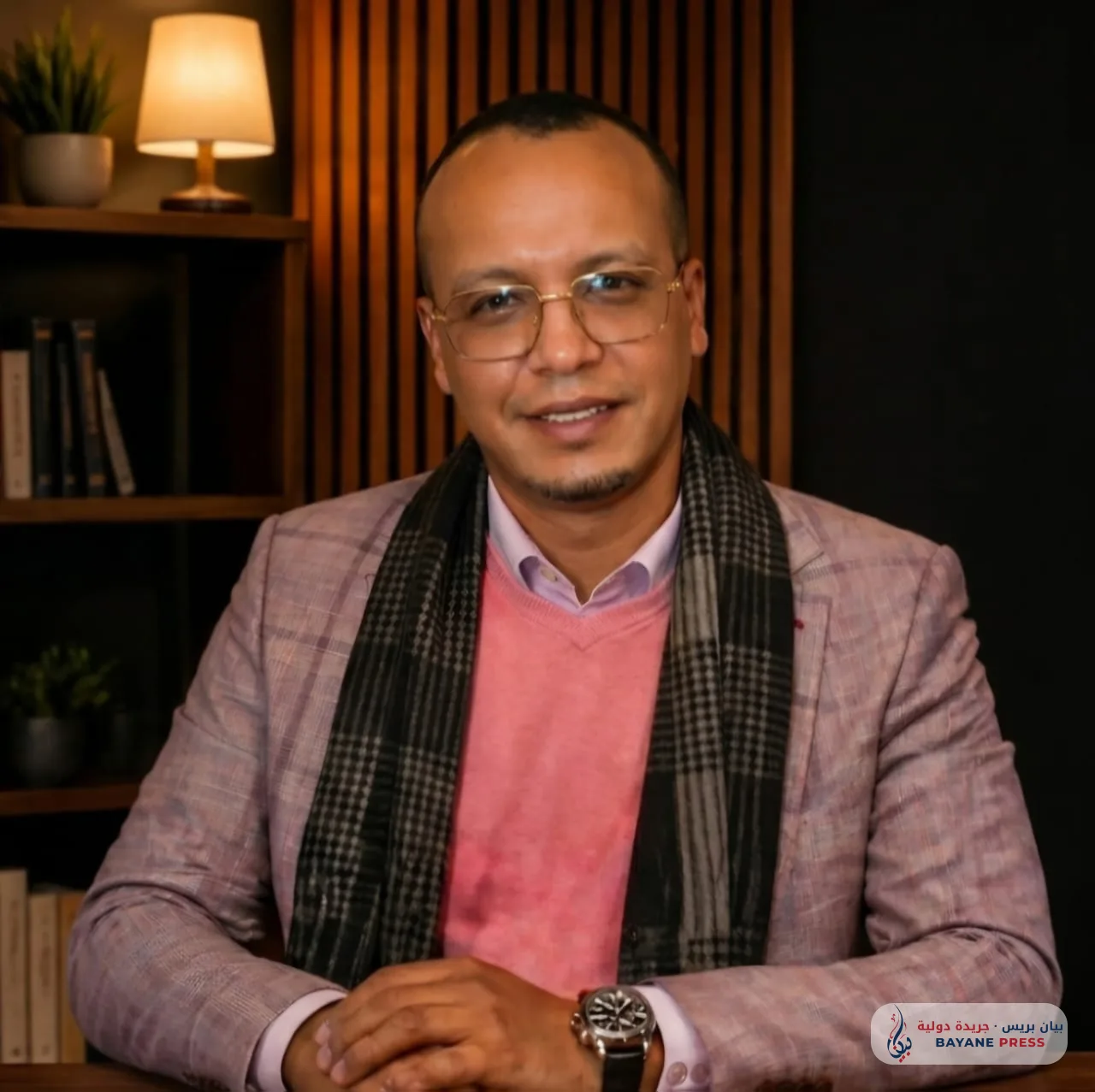
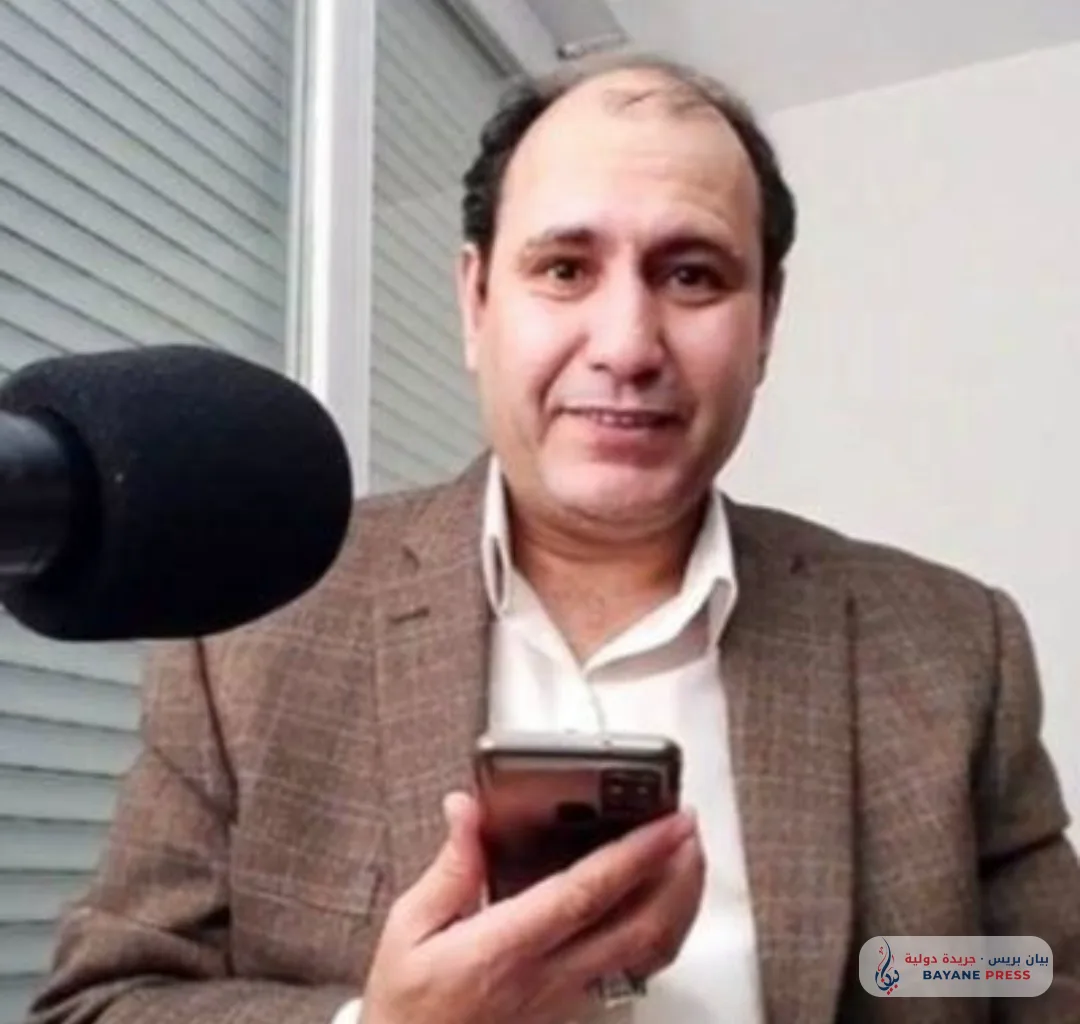
This is precisely what is prompted by the argument attributed to Radi Ellili, who spoke in a clip circulating on social media platforms about the possibility of the Algerian army intervening outside its borders, hinting at Morocco, invoking Moroccan-Israeli relations, and questioning whether Israel would militarily stand by the Kingdom in the event of a confrontation.
However, the question that would have been more appropriate to ask is not whether Israel would fight alongside Morocco, but why the strength of a country with the stature, history, and institutions of Morocco is being reduced to the potential stance of a foreign state?
For the Morocco that Radi Ellili speaks of was not created by a military agreement, its existence was not founded by a foreign power, and it did not derive its political identity from a circumstantial alliance. It is a country whose political identity was formed through centuries of resistance, confrontation, negotiation, and institution-building, and it has managed to preserve its specificity and the continuity of its political entity amidst historical transformations that toppled numerous empires and kingdoms.
And while the Ottoman Empire was extending its influence over vast areas of the world, and Algeria became a province subject to it since the sixteenth century, Morocco remained outside the circle of direct Ottoman rule, despite attempts at expansion and interference in its internal affairs.
In fact, Moroccan forces during the Saadi dynasty era went beyond defense, and in 1550, they managed to take control of Tlemcen, before the Ottomans reclaimed it in 1552. In 1558, the Wadi al-Laban region, near Fez, witnessed a military confrontation after which the Ottoman forces failed to subject Morocco to their authority.
Twenty years later, specifically on August 4, 1578, Morocco wrote one of the most prominent pages of its military history in the Battle of Alcácer Quibir (Wadi al-Makhazin), when it inflicted a historic defeat on the Portuguese campaign, in a confrontation whose repercussions transcended Moroccan borders to influence the European political landscape.
Even in contemporary history, the Sand War of 1963 is not a page that can be erased from memory, after Moroccan forces achieved field progress at a time when Algeria received external support, especially from Egypt and Cuba, before the confrontations ended with African mediation and a ceasefire without changing the borders.
However, Morocco today does not live on the balance of its ancestors' victories, nor does it derive its ability to defend itself from the pages of history alone, but from an integrated system that combines political and military leadership, intelligence work, proactive security, diplomacy, and defense modernization.
Since King Mohammed VI ascended the throne in 1999, the Kingdom has moved towards modernizing its defense capabilities, diversifying its partnerships, and strengthening its security institutions. The King, as the Supreme Commander of the Royal Armed Forces, carries out pivotal constitutional responsibilities in the military and strategic fields, within a system that combines the protection of national sovereignty, the management of international relations, and the anticipation of regional transformations.
This approach cannot be read in isolation from the nature of the Kingdom's geographical location, which sits at the crossroads of Africa and Europe, overlooks two maritime fronts, neighbors regions experiencing continuous security and political tensions, and faces the risks of terrorism, smuggling, organized crime, irregular migration, and cyber challenges.
Protecting a country with this location and these extensions is not the task of a single agency, but the responsibility of a system that operates on land, at sea, and in the air, and in both internal and external spheres. Its roles are distributed among the Royal Armed Forces, the Royal Gendarmerie, the National Security, the General Directorate for Territorial Surveillance (DGST), the General Directorate for Studies and Documentation (DGED), the Auxiliary Forces, and other specialized institutions.
At a time when some are busy counting aircraft, tanks, and missiles, they overlook the fact that intelligence is one of the pillars of power in modern warfare, and that accurate information can be decisive in preventing a threat before it turns into a confrontation.
How many dangers does the citizen not know the details of because they were thwarted before they occurred? How many criminal or terrorist plots did not reach the execution stage thanks to proactive security and intelligence work? And how much effort is exerted by men and women working away from the spotlight, so that daily life continues normally?
Part of the success of security institutions does not appear in the events that happen, but in those they succeed in preventing from happening.
The talk about Moroccan security and intelligence capabilities is no longer limited to internal discourse; it has become the subject of international reports and testimonies. On March 25, 2026, the Spanish Ministry of Interior announced that cooperation between the Spanish National Police and the Moroccan General Directorate for Territorial Surveillance had resulted in 31 joint counter-terrorism operations over more than a decade.
US State Department reports have also documented the contribution of Moroccan agencies to dismantling extremist networks and thwarting terrorist plots, which reflects the importance of the Kingdom as a partner in confronting cross-border threats.
Here, one of the facts that is absent from the reading that reduces Morocco to its foreign relations becomes clear; the Kingdom is not merely a recipient of security and military services from its partners, but contributes in turn to the security of other countries through the exchange of information, expertise, and intelligence coordination.
This concept extends to the Moroccan military institution, which works to modernize its land, air, and naval capabilities, develop the readiness of its personnel, benefit from modern technology and joint training, and diversify sources of armament, in addition to working on developing a national base for defense industries.
Perhaps the African Lion maneuvers, of which the Kingdom hosts a major part, provide an example of the depth of Moroccan military cooperation with multiple international partners. Furthermore, the classification of Morocco as a Major Non-NATO Ally of the United States of America since 2004 shows that its strategic defense relations preceded the resumption of relations with Israel by many years.
When Radi Ellili asks whether Israel would militarily stand by Morocco, he is posing a question that is not sufficient in itself to judge the Kingdom's defensive capability.
Morocco cooperates with Israel, Algeria cooperates militarily with Russia, and many countries in the world import weapons, technology, and expertise from their partners. Does Algeria become a weak state if Russia does not enter the war on its side? And if the answer is no, why is this logic used when talking about Morocco?
Acquiring weapons does not mean acquiring sovereignty from abroad, intelligence cooperation does not mean the absence of national intelligence, and military partnership does not mean that the state is unable to make its own defensive decisions.
As for the talk about the possibility of sending the Algerian army outside the borders, a legal reading requires distinguishing between possessing the constitutional authority to send military forces and possessing the right to attack another state.
This provision originates from the Algerian constitutional amendment of 2020, and Article 91 requires the approval of a two-thirds majority in each of the two chambers of Parliament to send military units abroad, while Article 31 stipulates refraining from resorting to war to infringe upon the sovereignty and freedom of other peoples.
The application of this authority was embodied in the Algerian Parliament's approval, on October 25, 2026, to send military units to Niger, in the context of cooperation between the two countries. However, this does not grant Algeria, or any other country, an open mandate to violate the sovereignty of its neighbors.
Furthermore, issuing a law that allows for sending military forces abroad does not in itself constitute a standard for military superiority, just as possessing the ability to declare war does not mean the ability to win it or control its repercussions.
The importance of the Moroccan experience also lies in employing diplomacy as part of the national security system. Military action protects interests and sovereignty, intelligence action anticipates dangers, while diplomacy seeks to expand the circle of partnerships, reduce risks, and provide the appropriate international environment to protect the Kingdom's strategic interests.
From this perspective, studying Moroccan power requires looking at the integration of its institutions, the continuity provided by the Royal institution, the accumulation of security and military expertise, and the state's ability to mobilize its human, economic, and diplomatic resources in the face of challenges.
This does not mean that Morocco is immune to risks or that it does not face challenges and shortcomings, for there is no country in the world that is absolutely fortified. But ignoring the foundations that the Kingdom possesses, and reducing its security to the stance of a foreign ally, does not provide a complete reading of its reality.
The Morocco that Radi Ellili should read is not just the Morocco of the Saadians, the Battle of Alcácer Quibir, and the Sand War, but also the Morocco of security institutions that thwart dangers, intelligence that international agencies cooperate with, armed forces that continue to modernize their capabilities, and leadership that manages intertwined files in a highly sensitive regional environment.
For not every silence is helplessness, not every noise is strength, and not every avoidance of confrontation is fear of it.
Recognizing the foundations of Moroccan power does not require disparaging the Algerian people or denying their history, just as protecting sovereignty does not require promoting war between two countries whose peoples are bound by deep historical and human ties.
Morocco faced the ambitions of empires in the past, and today it faces the challenges of an era in which the tools of conflict and the concepts of power are changing. Between yesterday and today, weapons, means, and alliances have changed, but protecting sovereignty has remained at the heart of the responsibilities of the state and its institutions.
Whoever wants to read Morocco, let them read its history, study its institutions, understand the position of its leadership, and contemplate the nature of the work performed by its military, security, and intelligence agencies.
For the power that protects homelands is not measured by the volume of voices in front of microphones, but by the ability of institutions to make the homeland safe, even when conditions around it are turbulent.
Comments (0)
No comments yet. Be the first to react!