

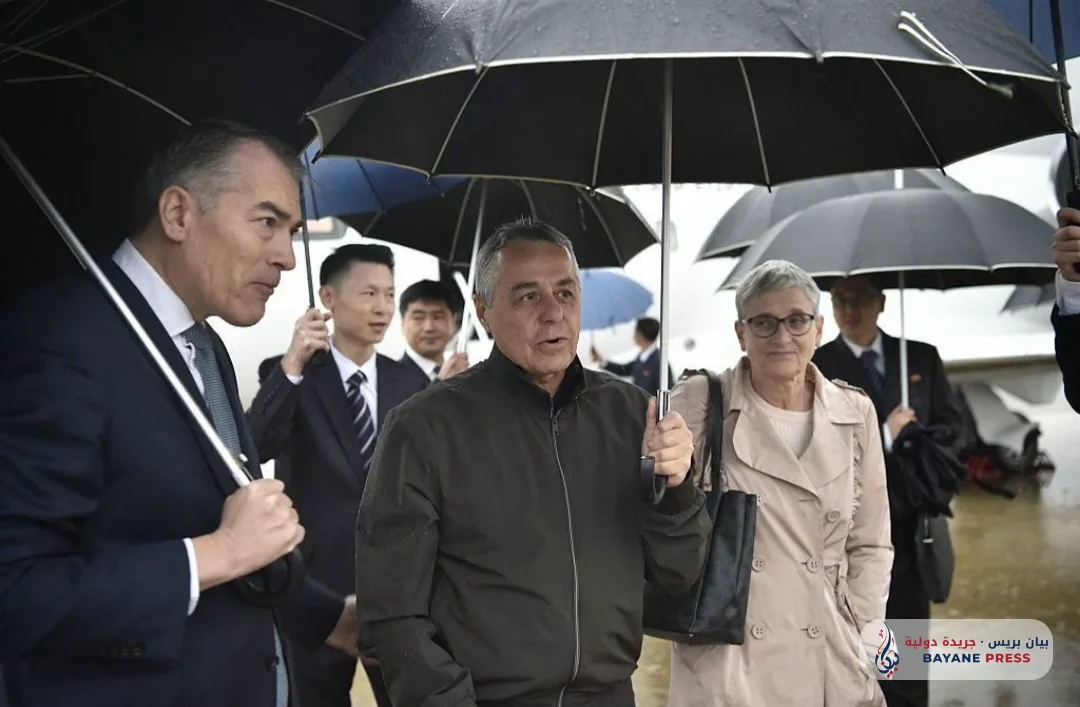
Relations between North Korea and Switzerland have entered a phase of diplomatic escalation after the North Korean Foreign Ministry announced, on Wednesday, November 25, 2026, the closure of the Swiss diplomatic office in Pyongyang, declaring its head persona non grata and giving him a deadline of no more than 48 hours to leave the country.
The decision came in response to the Swiss authorities' inclusion of the "Songdowon" International Children's Camp, located in the coastal city of Wonsan, on a list of sanctions related to the Russian-Ukrainian war, due to suspicions of its involvement in programs to transfer Ukrainian children from Russian-controlled areas to North Korea.
The Korean Central News Agency reported that Pak Hyon Su, the official in charge of European affairs at the Foreign Ministry, summoned the head of the Swiss diplomatic office, Sylvain Astier, and handed him an official note containing the decision to close the office and demanding his departure from North Korean territory.
This measure comes one day after warnings issued by Kim Yo Jong, the sister of North Korean leader Kim Jong Un, who considered the Swiss sanctions a hostile act that infringes upon her country's sovereignty, asserting that the camp is part of cultural and recreational activities aimed at children.
In contrast, Swiss authorities base their decision on allegations that the camp participates in programs linked to the transfer of Ukrainian children and exposes them to pro-Russian ideological content, allegations for which Pyongyang rejects the basis upon which the sanctions were built.
The Swiss Federal Department of Foreign Affairs had clarified on Tuesday that its policy regarding sanctions is independent of the decision to reopen its diplomatic office in North Korea, affirming its commitment to dialogue even with countries with which it disagrees on a number of international issues.
The crisis is of particular importance given the recent resumption of the Swiss diplomatic presence in Pyongyang, as Bern reopened its office last October in the context of efforts to revive direct communication channels after years of field interruption.
The same month saw a visit by Swiss Foreign Minister Ignazio Cassis to North Korea, where he held talks with his counterpart Choe Son Hui regarding the development of bilateral dialogue and cooperation.
Diplomatic relations between the two countries date back to 1974, while Switzerland began humanitarian cooperation activities in North Korea in 1997, before withdrawing its office staff in 2020 following border closures due to the COVID-19 pandemic.
The new escalation reflects the extension of the diplomatic repercussions of the war in Ukraine to East Asia, in light of the rapprochement between Moscow and Pyongyang and the tightening of punitive measures by several European countries against entities accused of contributing to war-related activities.
The closure of the Swiss office is likely to narrow one of the limited channels of communication between North Korea and Western countries, without necessarily meaning a complete severance of diplomatic relations between the two countries, a measure that neither capital has announced so far.


Comments (0)
No comments yet. Be the first to react!