

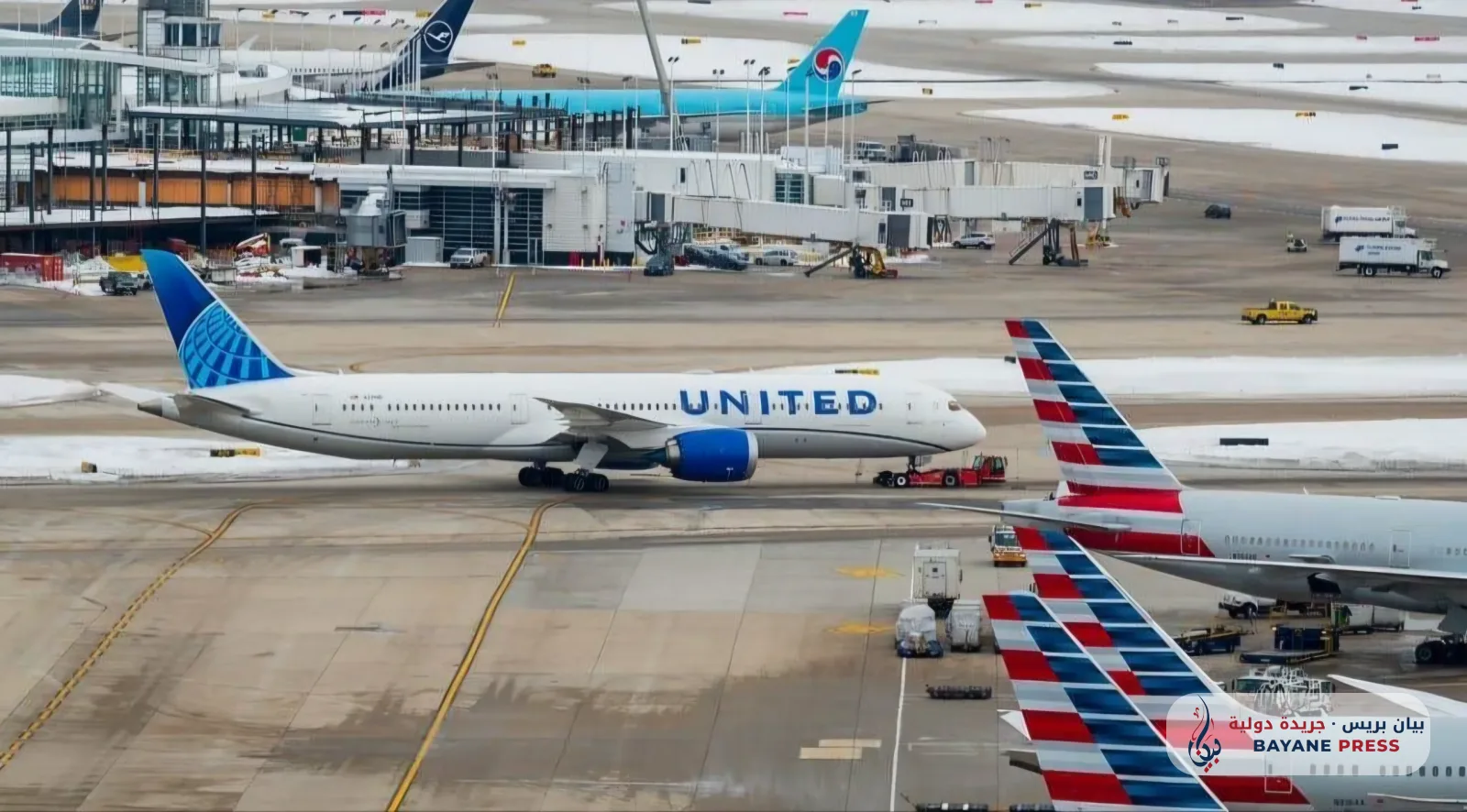
The United States experienced, on Friday, November 13, 2026, an extraordinary disruption in the civil aviation sector after the US Federal Aviation Administration (FAA) issued an urgent order to suspend all flight departures from airports across the country. This followed a widespread glitch in the air traffic control communication system, a rare precautionary measure that raised concerns about major disruptions to domestic and international air traffic.
The decision came after relevant authorities detected communication issues affecting several regional centers responsible for guiding aircraft and organizing flight paths. This prompted the FAA to issue binding instructions to keep departing flights on the ground until further notice, justifying the measure by citing exceptional circumstances that require prioritizing the safety of air navigation and the protection of passengers and flight crews.
US Secretary of Transportation Sean Duffy confirmed that the glitch affected the communication system linked to all regional air traffic control centers, noting that the FAA's technical teams have launched investigations to determine the nature of the failure and address it. In their initial statements, authorities did not disclose the exact technical cause of the problem or the expected duration for restoring normal operations.
According to data reported by Reuters and the news site "Axios," the decision did not force aircraft already in the air to land immediately; they were permitted to continue their flights and reach their destinations according to air traffic control instructions. Meanwhile, international flights arriving at US airports were subject to case-by-case assessments, in consideration of safety requirements and operational conditions.
Signs of the disruption first appeared in Chicago, where flight restrictions were imposed at O'Hare and Midway airports due to air traffic control communication issues, before the scope of the intervention expanded to include all US airports—a development reflecting the sensitive interconnectedness of the control centers managing the airspace over the United States.
This crisis is particularly significant given the reliance of the US aviation network on an intricate system of control centers, communications, and navigational data. Any widespread disruption in one of its core components can quickly impact flight regularity, lead to delays in departures and arrivals, disrupt aircraft and crew scheduling, and cause ripple effects at international airports linked to US destinations.
The incident brings to mind a similar crisis the United States faced in January 2023, when a failure in the Notice to Air Missions (NOTAM) system caused a nationwide suspension of departing flights for nearly two hours. That was the first such comprehensive suspension since the terrorist attacks of September 11, 2001, making the new decision one of the rarest measures in modern US civil aviation history.
These developments come at a time when the technical infrastructure of US air traffic control is facing accumulated challenges related to upgrading communication and navigation systems. According to Reuters, the US Congress approved $12.5 billion in 2025 to modernize an aging air communication system, while the FAA and the White House requested an additional $30.1 billion in funding on Friday to address other sector needs.
The crisis once again reveals the strategic importance of the technical systems that control air traffic, not merely as operational tools, but as part of the critical infrastructure for economic security and international transport, especially since any widespread halt in US airspace can impact transcontinental aviation networks, supply chains, and passenger movement.
As of the initial reports upon which this news is based, US authorities had not announced a definitive cause for the failure or a confirmed count of affected flights. Furthermore, no official confirmation of a return to normal departure operations was available, pending the results of technical investigations and updates from the FAA regarding the safe resumption of operations.


Comments (0)
No comments yet. Be the first to react!