

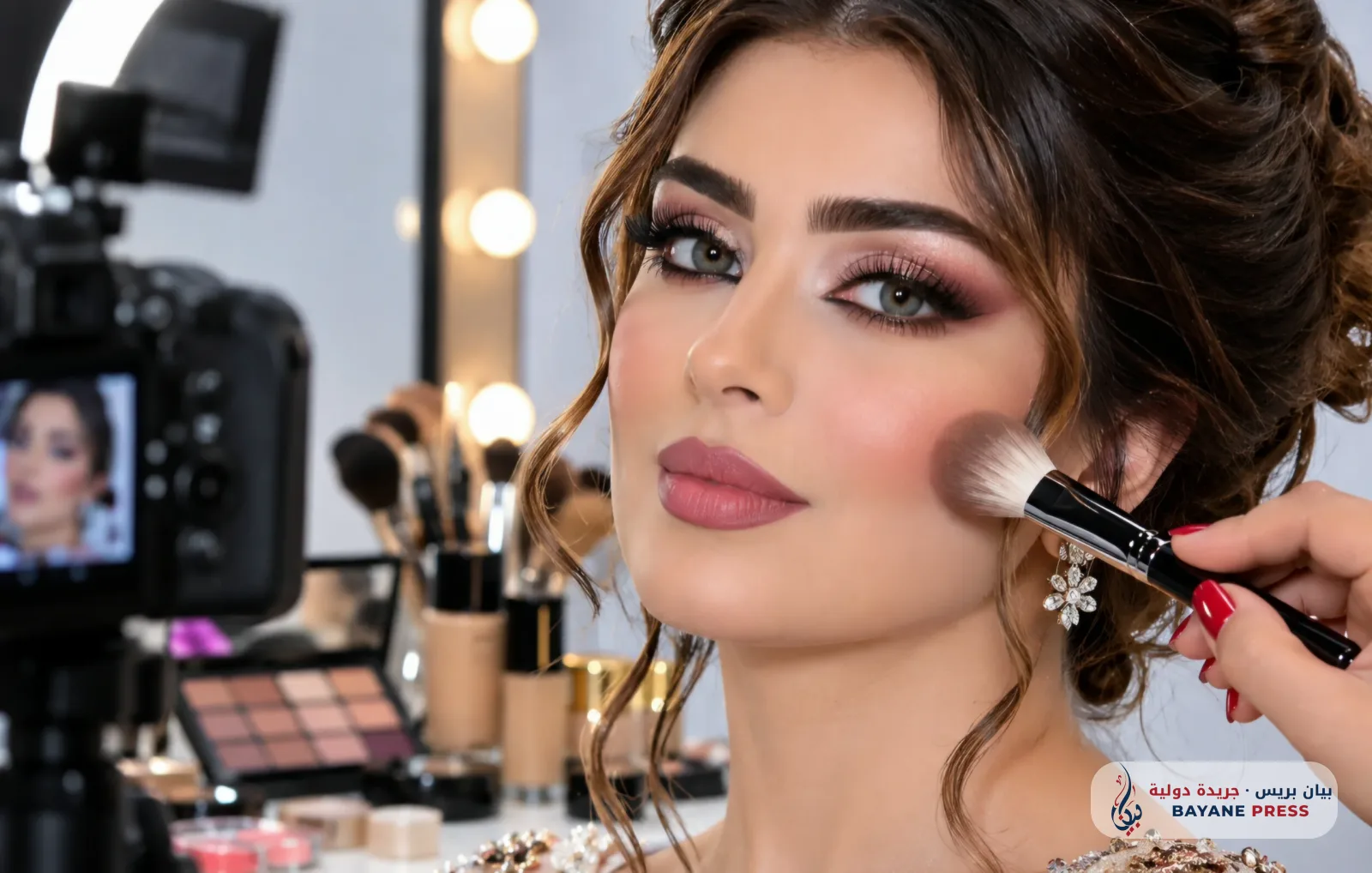
The evolution of cameras and imaging technology has revolutionized the beauty industry, as modern lenses now capture fine skin details that might not be visible from a normal distance. This has led to the rise of what is known as HD Makeup, a technique focused on achieving a seamless appearance under bright lights and close-up shots.
This approach focuses on minimizing the appearance of product layers on the skin while maintaining adequate coverage for pigmentation, redness, and minor blemishes. Some products designed for this purpose rely on fine pigments and ingredients that help diffuse light or visually improve skin texture.
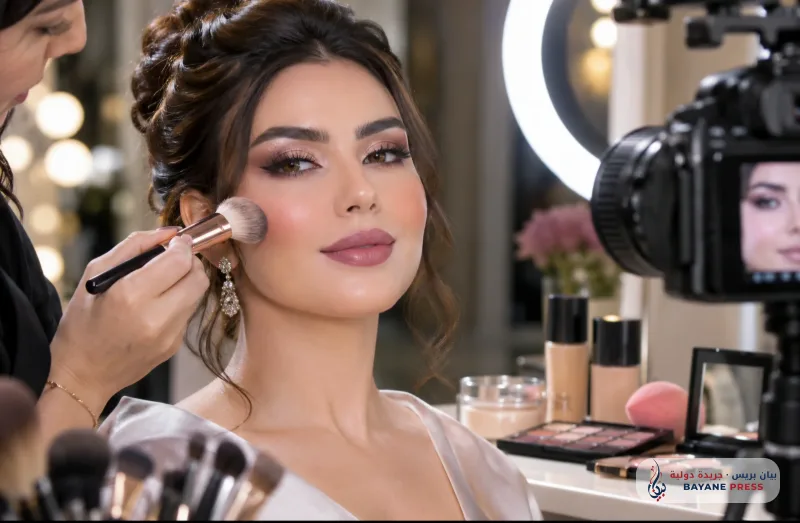
Application begins with prepping, cleansing, and moisturizing the face, as dry patches and flakiness can become clearly visible under high-definition cameras. A foundation suitable for the skin tone is then applied in thin, even layers rather than relying on heavy coverage that is difficult to blend.
One of the most important secrets of this style is precise color matching, as any discrepancy between the foundation and the neck becomes more apparent during filming. One must also consider the effect of warm and cool lighting, as each can alter the visual appearance of colors and shadows.
Blending techniques play a crucial role, especially when using concealer and contour, because sharp edges or clumps can become more pronounced in close-up shots.
A well-known phenomenon in makeup photography is "flashback," where certain areas of the face appear whiter than their surroundings when a flash is used. Certain powders or light-diffusing ingredients, along with product overuse and lighting conditions, can contribute to this effect.
This does not necessarily mean that all products containing silica or titanium dioxide cause the problem, as the result depends on the overall formula, the quantity used, and the shooting conditions.
It is advisable to test makeup using the actual camera and lighting before a photo shoot, taking pictures both with and without flash to observe differences and correct any uneven areas.
One should also be aware that certain lighting and shooting techniques may highlight shine, texture, or pores. Therefore, makeup may require minor adjustments based on the position and direction of the light, rather than randomly adding more products.
This style is commonly used in television programs, filmed interviews, and professional photo shoots, but it has also become important for personal events where smartphone and modern camera photography are prevalent.
A common misconception is that buying a product labeled "HD" is enough to achieve a professional result, whereas application skill, skin type, and lighting quality significantly influence the outcome.
High-definition makeup reveals the close relationship between the art of beauty and imaging technology, where the goal is no longer to hide every detail of the skin, but to make the face appear consistent and natural even when the lens zooms in on its finest features.

Comments (0)
No comments yet. Be the first to react!