

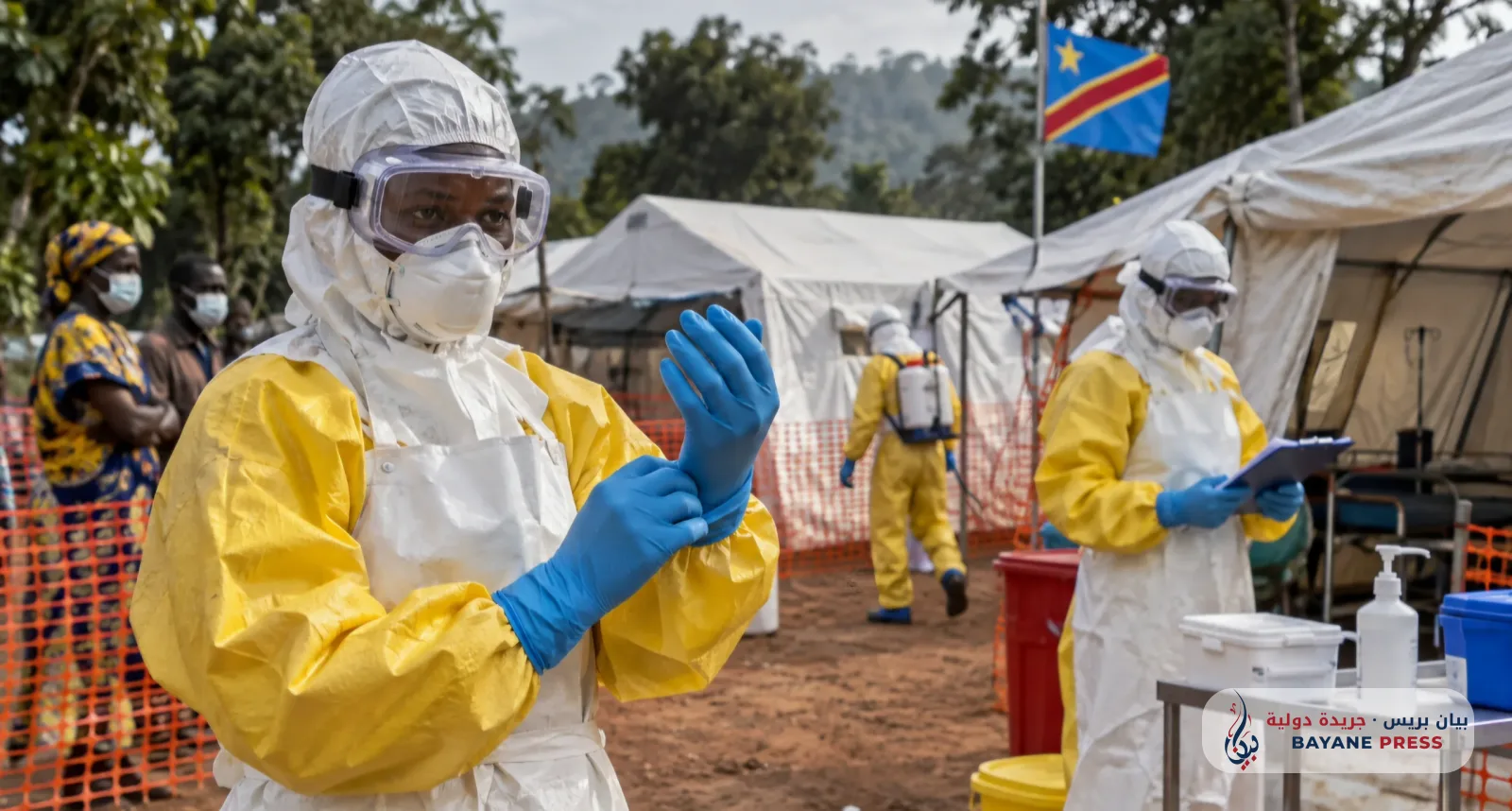
The death toll from the Ebola outbreak in the Democratic Republic of Congo has exceeded six thousand people, according to government data reported by Reuters on Sunday, November 29, 2026, in a development that reflects the severity of the health crisis facing the country, amid increasing difficulties in containing the epidemic.
The toll reported by Reuters last Thursday had reached 12,021 confirmed cases, compared to 5,904 deaths, before the fatalities surpassed the six thousand threshold, in the second-largest Ebola outbreak in recorded history.
The current outbreak was announced in mid-May in Ituri province, in the northeast of the country, before spreading to eight out of 26 provinces. This outbreak is caused by a strain of the Ebola virus known as "Bundibugyo," for which there are currently no approved vaccines or specific treatments available to combat it.
Health teams are facing significant challenges in contact tracing, isolating patients, and containing infection clusters, in light of deteriorating security conditions and difficulty accessing affected areas, as well as increasing pressure on the health system.
The World Health Organization revealed in a statement issued on Friday, November 27, that it had verified at least 94 attacks on the healthcare sector since the outbreak was declared a public health emergency of international concern, calling for the acceleration of clinical trials for candidate vaccines and treatments to combat the virus.
In another indicator of the gravity of the situation, a previous Reuters investigation, based on an analysis of satellite imagery, revealed that the official death toll may be lower than the actual numbers in the Bunia and Mongwalu regions, which are considered among the areas most affected by the epidemic.
The Ebola virus is transmitted through direct contact with the blood or body fluids of infected individuals and can cause severe fever, vomiting, diarrhea, and organ dysfunction, as well as hemorrhaging in some cases.
The current outbreak brings to mind the Ebola catastrophe that swept through West Africa between 2014 and 2016, claiming the lives of more than 11,000 people, while international health efforts continue to contain the current epidemic, which has become one of the most serious health crises facing the African continent.


Comments (0)
No comments yet. Be the first to react!