

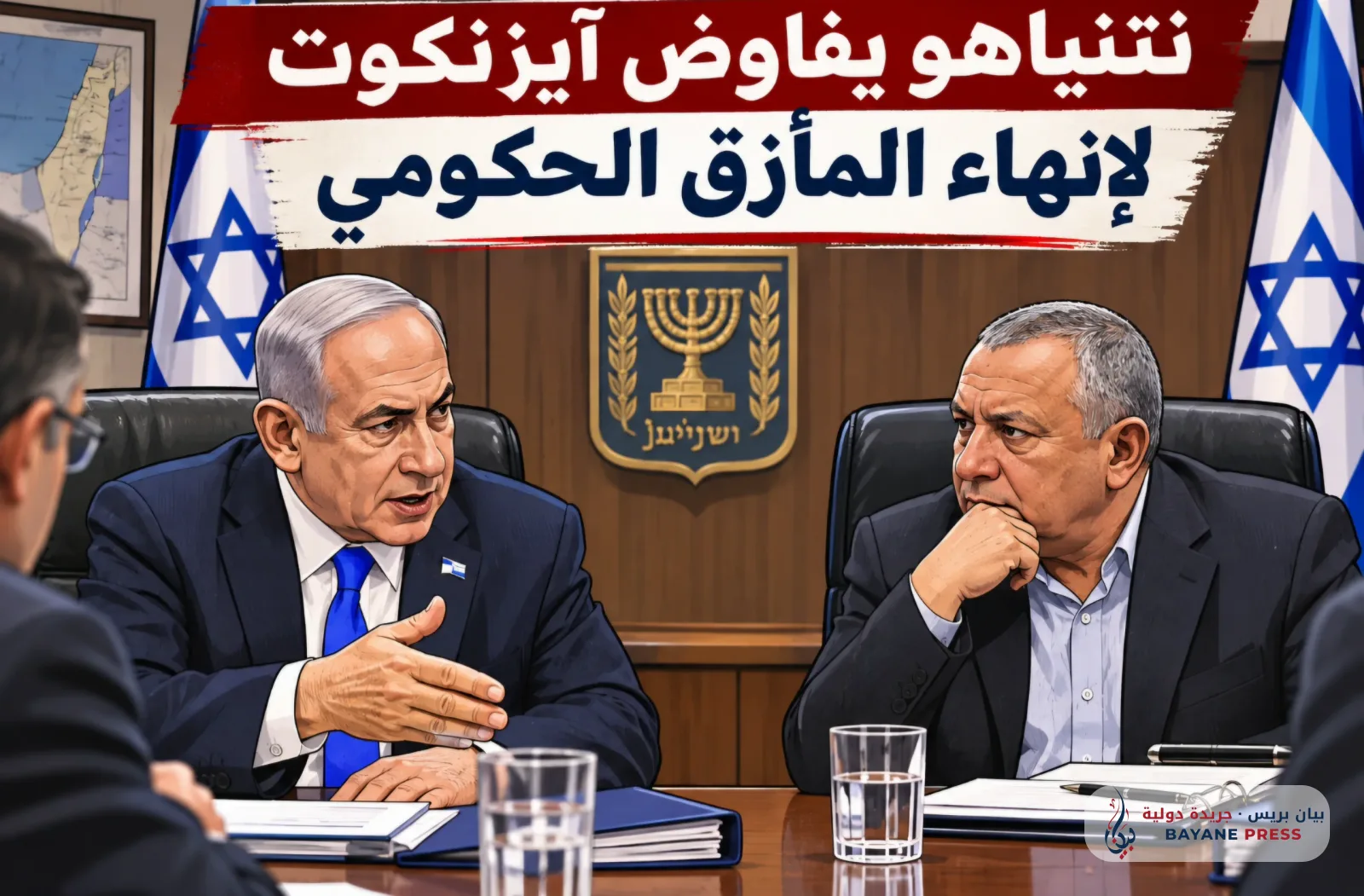
Israeli caretaker Prime Minister Benjamin Netanyahu and 'Yashar' party leader Gadi Eisenkot held a meeting on Sunday morning, November 29, 2026, to discuss the possibility of forming a national unity government, in an attempt to overcome the political deadlock that followed the legislative elections held on October 27.
The meeting came after Netanyahu announced on Saturday evening his willingness to accept a rotation agreement for the premiership, under which Eisenkot would serve as Prime Minister first, while Netanyahu would hold the position of Alternate Prime Minister.
Eisenkot responded by calling for direct negotiations, setting a twenty-four-hour deadline to test the seriousness of the offer and the possibility of reaching an understanding on forming the government.
Israeli President Isaac Herzog had officially tasked Eisenkot with forming the government on November 8, after election results showed the difficulty for either political camp to secure a stable majority within the 120-seat Knesset.
Although the Likud party led the election results, the right-wing and religious parties that formed the traditional base of Netanyahu's coalition were unable to retain a parliamentary majority.
Conversely, Eisenkot faces difficulties in reconciling the positions of the political forces supporting him, particularly regarding the participation of Arab parties or ultra-Orthodox religious parties in the future coalition.
The contentious issues before the negotiators include the mandatory conscription of ultra-Orthodox Jews and the demand for an official inquiry into the security failures associated with the events of October 7, 2023.
The initial deadline granted to Eisenkot to form the government is set to expire on December 6, with the possibility of an extension according to established legal procedures.
As of the time of writing, the two parties have not announced a final agreement, leaving the future of the government coalition dependent on the outcome of the negotiations and their ability to overcome their political differences.




Comments (0)
No comments yet. Be the first to react!