

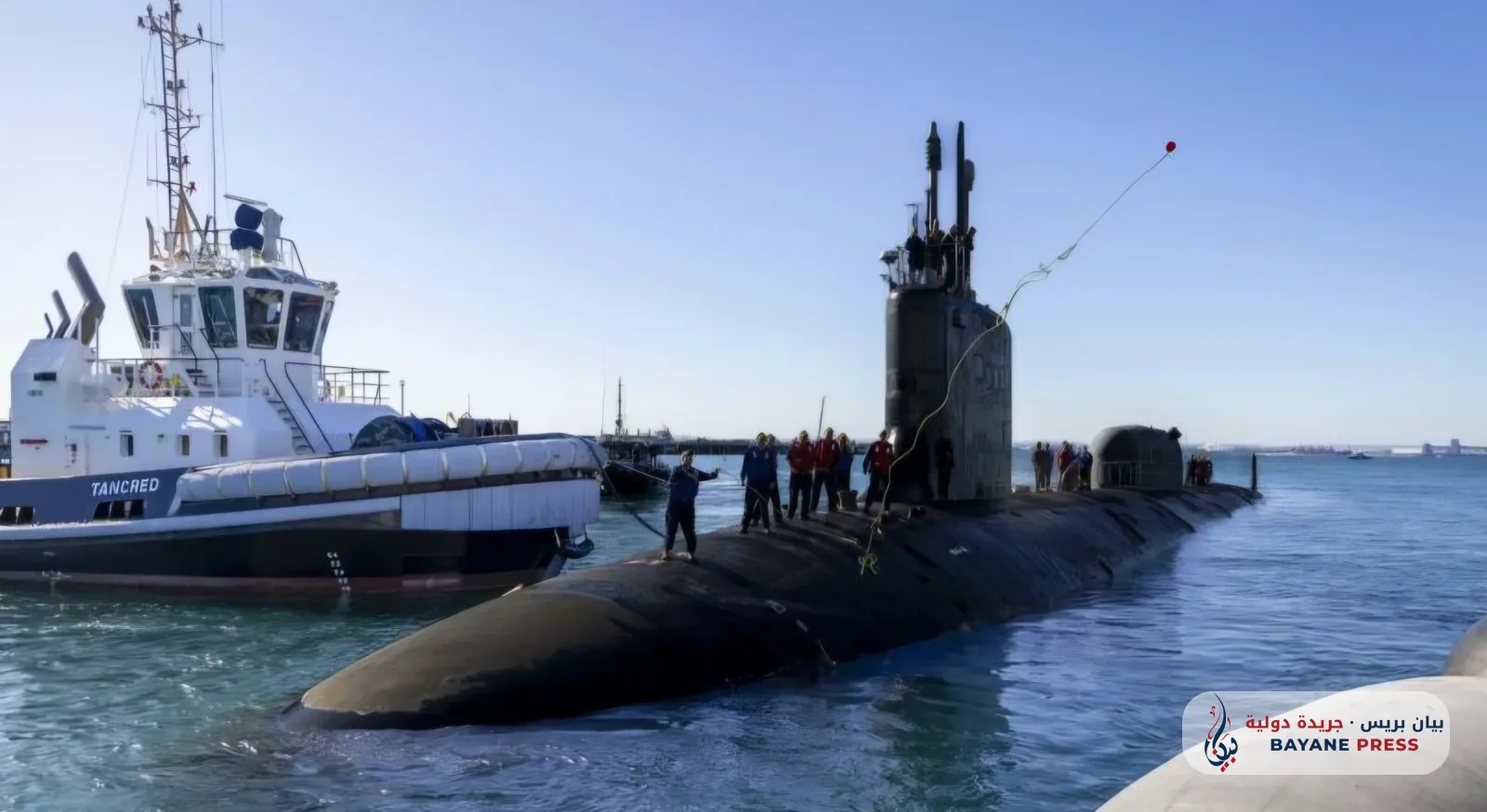
The Australian nuclear submarine project has entered a new phase of controversy between Canberra and Washington, after Australian Defense Minister Richard Marles rejected, this Sunday, November 22, 2026, the findings of a report issued by the US Congressional Budget Office, which warned that the implementation of the "AUKUS" defense agreement could lead to a reduction in the number of attack submarines available to the US Navy for many years.
Marles' response was decisive during a television interview, as he deemed the US estimates incorrect, asserting that submarine production within the United States is increasing and that the joint project between Australia, the United States, and Britain is proceeding according to plan, despite the industrial and financial challenges facing its implementation.
The US report, released on Friday, November 20, had warned that the sale of "Virginia-class" submarines to Australia could affect the size of the US fleet until the year 2060, especially as US shipyards face difficulties in meeting Navy needs due to slow production and a backlog of manufacturing and maintenance orders.
The figures reveal the scale of the challenge, as the average production rate of US submarines of this class is about 1.13 per year, while the US Navy needs to increase production to two per year to meet its own needs, and about 2.33 per year to fulfill additional commitments to Australia.
The "AUKUS" agreement, signed in 2021, is one of the largest military projects in Australia's history, with an estimated cost ranging between 268 and 368 billion Australian dollars over three decades. It includes the purchase of US nuclear-powered submarines before transitioning to the development of new submarines in cooperation with Britain, as part of a plan aimed at enhancing Australia's long-range naval capabilities.
The United States and Britain are expected to begin rotating nuclear submarine deployments at HMAS Stirling in Western Australia during 2027, with Canberra set to receive its first US submarines in the early 2030s.
However, the issue is not just about industrial capacity, but extends to US strategic calculations, as US law requires that the transfer of submarines must not weaken the combat capabilities of the United States. Furthermore, the submarines that will come under Australian sovereignty will not be automatically obligated to participate in any war led by Washington, including a potential confrontation with China over Taiwan.
This controversy comes amid escalating military competition in the Indo-Pacific region, where Washington and its allies seek to balance Chinese naval influence, while Beijing views the "AUKUS" agreement as a factor that could fuel an arms race and increase regional tension.
Despite the Australian government's commitment to the project, the US warnings place the future of the agreement before a real test, in which the ability to manufacture intersects with national security requirements and the interests of allies, raising a fundamental question about the United States' ability to strengthen Australia's naval power without affecting the readiness of its own military fleet.
Comments (0)
No comments yet. Be the first to react!