


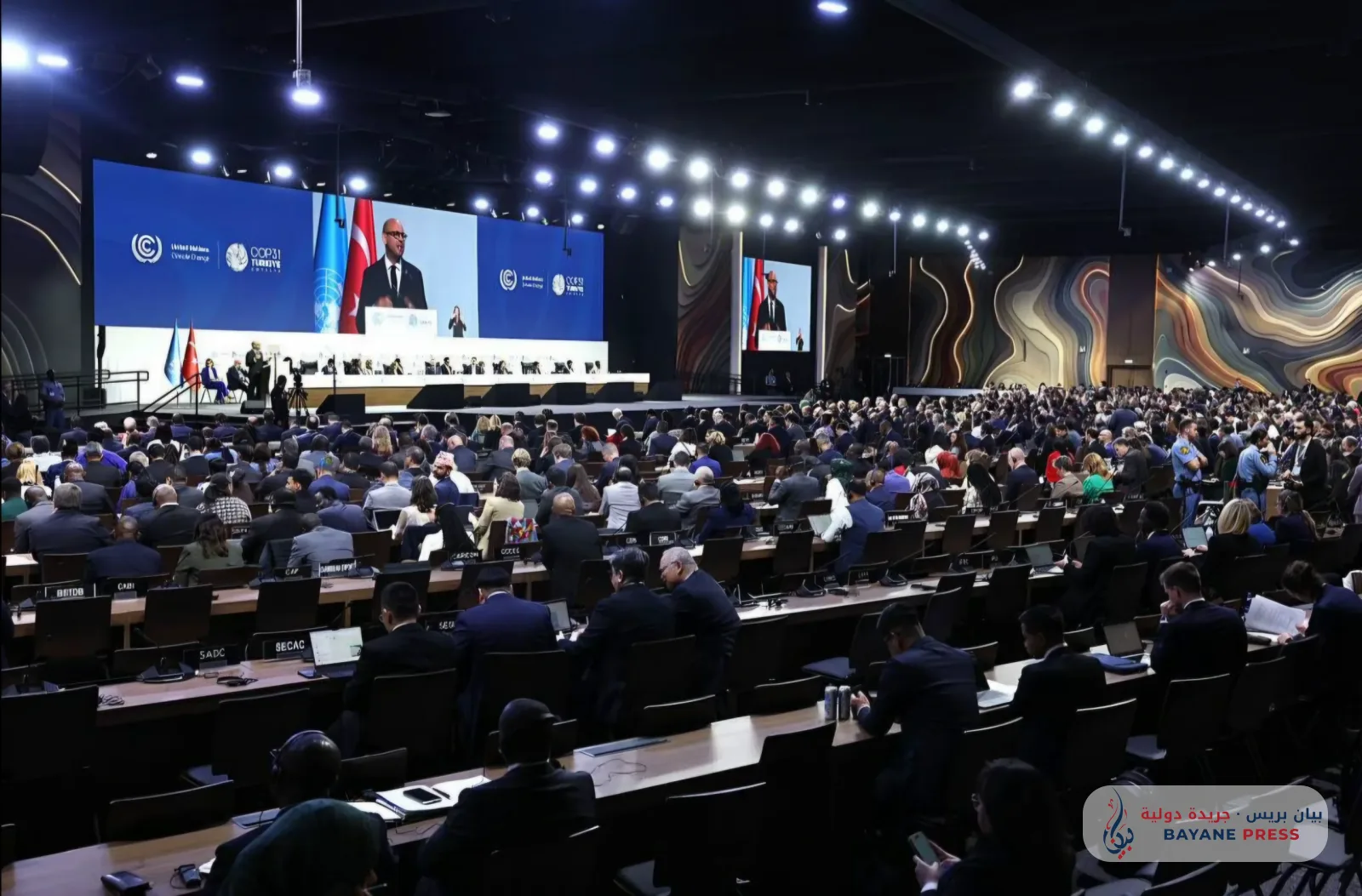
Ongoing discussions at the UN Climate Change Conference "COP31," held in the Turkish city of Antalya, have revealed new disagreements between nations regarding the future of global energy, after Turkey proposed an ambitious initiative to raise the share of electricity in global energy consumption to 35 percent by 2035.
The initiative aims to accelerate the adoption of electricity in the transport, industrial, and residential sectors, replacing the direct use of fossil fuels in an effort to reduce greenhouse gas emissions.
However, the core dispute centers on the source of this electricity. Some parties demand that the expansion be linked to clean and renewable energy, while the proposed text does not explicitly require that the increase come exclusively from emission-free sources.
Critics of the proposal warn that increasing electricity consumption produced by coal and gas could lead to continued reliance on fossil fuels without achieving the required reduction in emissions.
In a parallel track, an initiative supported by Australia and several other countries has emerged, aiming to double the number of homes equipped with solar panels globally from approximately 150 million to at least 300 million by 2030.
Despite international interest in the initiative, the announced commitments remain voluntary and legally non-binding, while their implementation faces challenges related to financing, the development of power grids, and the provision of storage systems.
The Antalya disputes reflect a broader dilemma in international climate policy regarding how to reconcile the need of economies for more energy with the necessity of reducing emissions, especially in developing countries that face financial and technical difficulties in transitioning toward less polluting production sources.




Comments (0)
No comments yet. Be the first to react!