

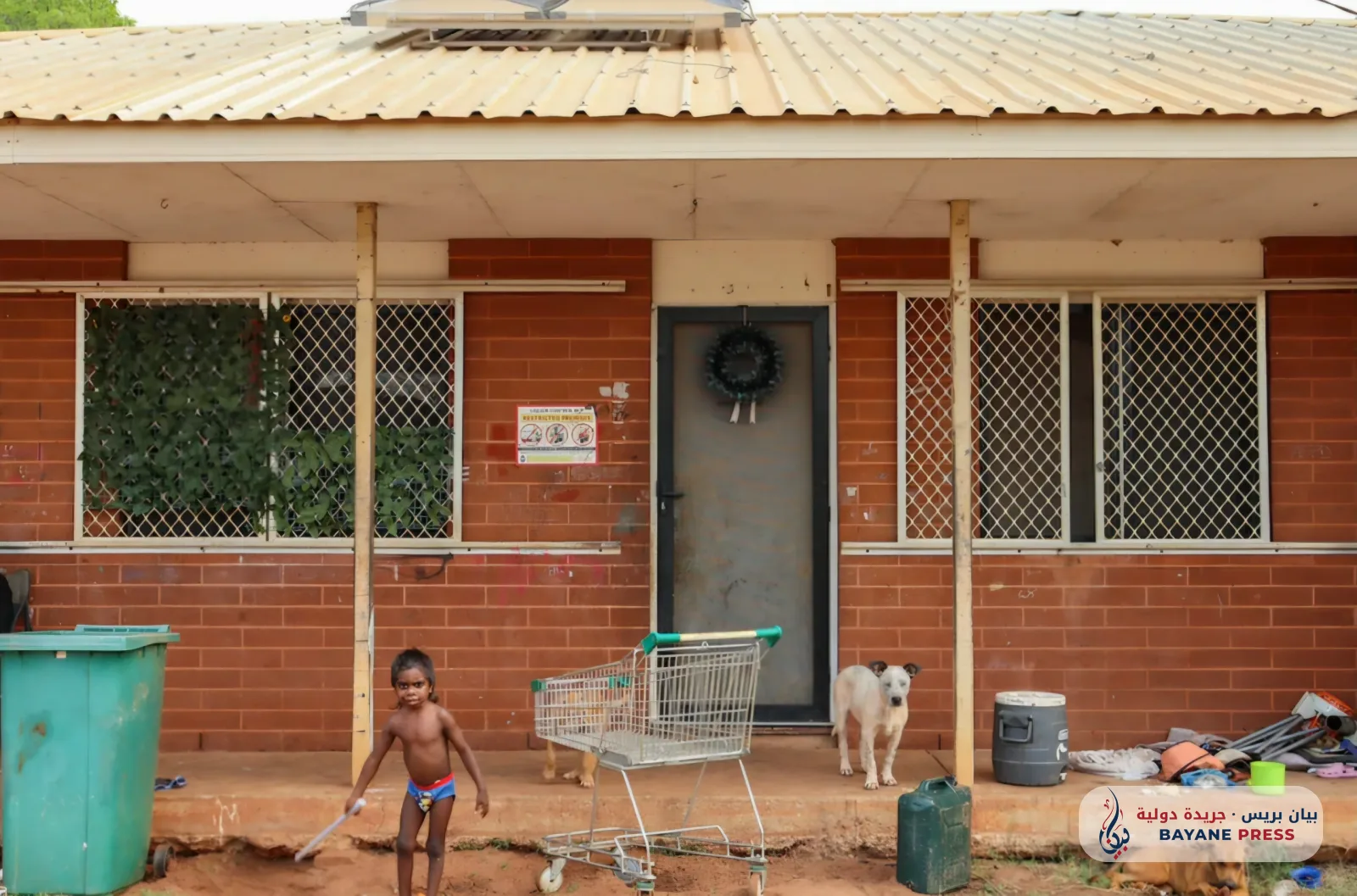
A poignant humanitarian case in Australia has revealed the extent of the suffering some families endure within government housing that lacks the most basic standards of safety and dignified living. After being forced to endure harsh housing conditions for over two years, amidst rat infestations, crumbling walls, and recurring electrical failures, a journalistic intervention succeeded in mobilizing authorities within just a few days, after repeated complaints had failed to achieve any tangible change.
According to an investigation published by the Australian Broadcasting Corporation (ABC) on Monday, November 23, 2026, Tanya Spider and her husband Robin Dunn, living in the town of Derby in northwestern Australia, resided in a public housing unit that gradually became a source of daily anxiety due to its deteriorating structure and widespread neglect.
The family revealed that the house walls contained at least ten large holes, which allowed rats to infiltrate the rooms, tamper with food supplies, and chew through electrical wiring, causing frequent power outages, in addition to the health risks posed by the presence of rodents inside the home.
The suffering did not stop there, as rainwater leaks led to the collapse of part of the ceiling, while other parts of the house remained in need of essential repairs, despite repeated reports submitted by the couple to the maintenance services.
The family's fears were compounded by the health condition of Robin Dunn, who had undergone heart valve replacement surgery and feared that the dilapidated state of the home would hinder ambulance crews from reaching him in the event of a sudden medical emergency.
The family had experienced a traumatic event in January 2026, when a family member passed away inside the home, and paramedics faced difficulties removing the body due to the narrow entrance and the damaged exterior flooring. Although there is no evidence linking the death to the housing conditions, the incident increased the couple's concerns regarding their safety.
Over the course of more than two years, the family continued to file complaints and request intervention to repair the damages, but the response remained limited, while the state of the house continued to worsen, making the couple feel that their suffering was not receiving sufficient attention.
However, the sudden shift occurred when the Australian Broadcasting Corporation began investigating the case and directed official questions to the housing department regarding the reasons for the persistence of this situation despite repeated complaints.
Just one day after the press intervened, a specialized committee was dispatched to inspect the house, and within four days, authorities took measures to relocate the family to temporary housing, while informing them that a permanent alternative residence would be provided.
The responsible authority acknowledged the delay in carrying out maintenance work and offered an apology to the family, confirming that measures would be taken to address the recorded deficiencies.
Yet, the speed of the response following media intervention raises a fundamental question: Why did the competent authorities not act throughout two years of complaints, while a few journalistic questions were enough to prompt them to take urgent action?
This case comes amidst a broader debate regarding the state of public housing allocated to Indigenous people in Western Australia, where a class-action lawsuit continues to raise the issue of the authorities' responsibility to provide housing that meets the requirements of safety, health, and human dignity.
This incident transcends the suffering of a single family, revealing the importance of media oversight in holding institutions accountable for their duties toward citizens, especially those who face difficulties in making their voices heard by the responsible parties.
Between complaints that lasted more than two years and a journalistic intervention that yielded action within four days, a painful paradox emerges that puts administrative responsibility to a real test, confirming that the mission of journalism is not limited to reporting facts, but that by uncovering truths and following up on them, it can contribute to protecting rights and upholding human dignity.



Comments (0)
No comments yet. Be the first to react!