

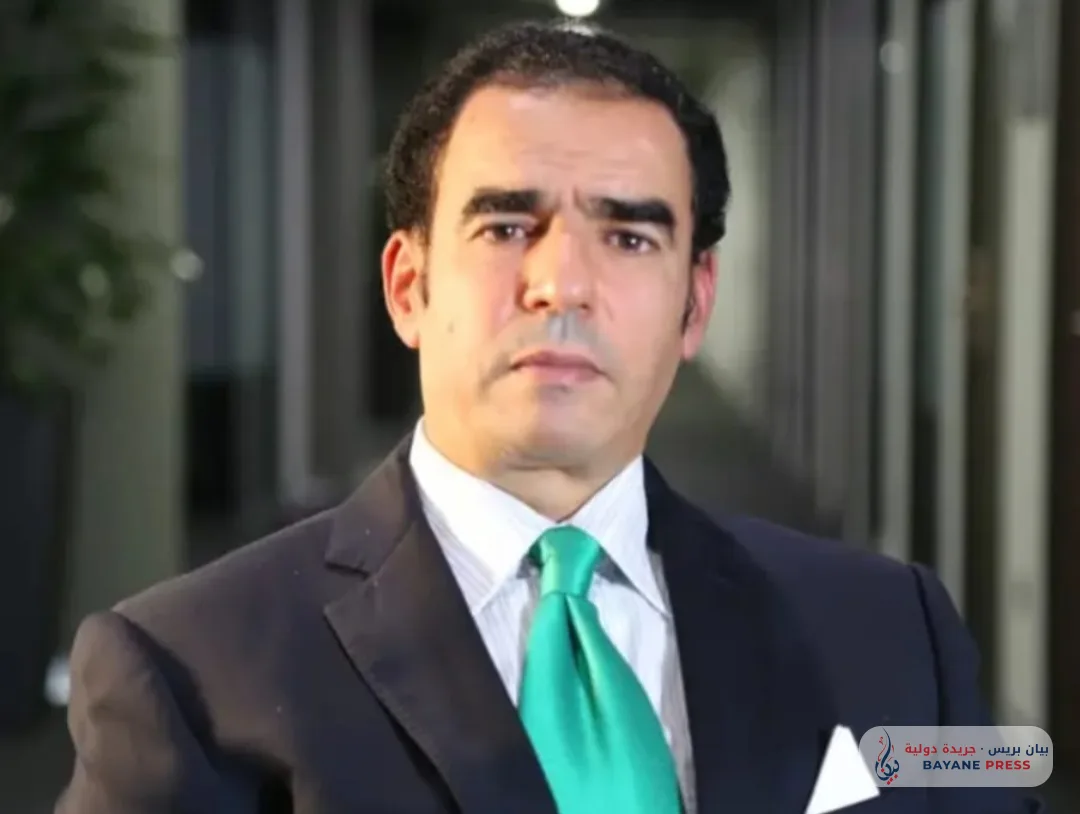
Through my reading and reflection on the literature of Islamic thought, particularly the teleological schools deeply rooted in the venerable Moroccan tradition through the efforts of its luminaries such as Qadi Ayyad and Imam al-Wansharisi, continuing with modern figures such as Allal al-Fassi, Dr. Ahmed al-Rissouni, and others who emphasized the necessity of understanding reality and deriving rulings in a manner that achieves the objectives (Maqasid) of Sharia in bringing about benefits and warding off harms within the constants overseen by the institution of the Commander of the Faithful. Furthermore, by virtue of my field residence in Italy and my daily experience of the details of the Muslim community's reality and its surrounding challenges and opportunities, these vivid observations prompted me to approach this topic with the eye of an investigative researcher; for the community here is experiencing a genuine labor, oscillating between an overwhelming desire to hold onto identity and the necessity of positive integration into the host fabric.
From this realistic standpoint, it becomes crystal clear that the Islamic legislative system intertwines in its structural essence with the higher objectives and overarching goals of Sharia, which aim to preserve the interests of people by warding off harms and securing benefits. This system operates with exceptional flexibility to organize the priorities of living and regulate the paths of human stability across various times and places.
This expansive teleological horizon—emanating from a comprehensive induction of revealed texts and their overarching rules—emerges today as an urgent cognitive and methodological necessity in contemporary Islamic thought, especially when deconstructing emerging novelties facing Muslim communities and the new generation in diaspora countries and Western environments in general, and in Italy in particular. Approaching the legal text according to the duality of concessions (Rukhs) and strict rulings (Aza'im), and prioritizing the jurisprudence of facilitation and lifting hardship over strictness, is no longer merely a secondary jurisprudential choice or a theoretical luxury. Rather, it has become a structural and strategic tool enabling the expatriate Muslim to achieve a precise civilizational equation that combines adherence to doctrinal and legislative constants on the one hand, and creative, fruitful contribution to the host civil and legal space on the other, based on the rule that hardship brings facilitation and observing the objectives of alleviation when need arises.
Formulating a contemporary jurisprudential theory that deals with the issues of Muslim minorities in the diaspora, drawing inspiration from that deeply established teleological vision, requires depth in foundational rooting and precise investigation of real-world outcomes. Jurisprudence is no longer a mere literal recall of ready-made rulings from heritage jurisprudence manuals isolated from their environment and underlying causes. Instead, it has become a composite ejtihadic process in which foundational textuality engages with sociological reality. This sound jurisprudential approach founds its legitimacy on definitive texts that call for lifting hardship and repelling difficulty from the legally responsible, considering that Sharia was built upon observing unprescribed and recognized public interests. From this perspective, the jurisprudence of moderation and renewal by no means reflects detachment from religious duties or keeping pace with modern materialism by twisting texts to justify a specific reality. Rather, it is the precise application of foundational rules that weigh matters using the balance of context, reality, and outcome.
Methodologically, the implementation of the jurisprudence of facilitation in diaspora societies relies on activating overarching rules and the five essential objectives: the preservation of religion, life, intellect, progeny, and wealth. When a jurist, imam, or diligent preacher looks into the novelties facing Muslim communities, he does not suffice with a rudimentary view limited to the literal text. Instead, he accompanies established rules such as the rule: "Treating a general need as a specific necessity." This is the flexible foundational rule that opens the door to alleviating rulings in contemporary financial transactions, real estate property, and political and civil integration, provided this does not clash with definitively established texts. Similarly, the importance of considering customary practice (Urf) and public interests in the host countries emerges, as social legislations and traditions become objective data that must be deconstructed to understand the basis of the legal ruling. Consequently, a decisive distinction is made between fixed principles that form the core of Islamic identity and variable jurisprudential branches that change with time, place, and circumstance, thus protecting the religious conscience of younger generations from psychological fragmentation and shielding them from falling into the trap of isolation, withdrawal, or assimilation and losing their values compass.
On a parallel level, and by virtue of my field experience and presence in Islamic religious-cultural association work and guidance discourse here in Italy, I have observed with regret the absence of a holistic foundational culture and enlightened teleological jurisprudence among a wide segment of those leading the preaching and discursive scene. So as not to be unjust to the sincere efforts of those dedicated, we must state that there is a very small minority who received rigorous education, studied Quranic sciences through memorization and exegesis, and graduated from recognized Islamic universities and religious institutes—a reality that only a stubborn denier would contest. This methodological vacuum negatively reflects on youth awareness and integration, necessitating that active Islamic institutions and bodies in the diaspora fundamentally reconsider the criteria for selecting those who ascend pulpits and preaching chairs, prioritizing scientific competence, realistic awareness, and a deep understanding of the jurisprudence of novelties, far from improvisation and superficiality that only add complexity to reality.
This legislative facilitation goes hand in hand with the necessity of conducting a critical review of the mechanisms of communicative and outreach discourse directed inward and outward. Islamic institutions, associations, and preachers in the West must abandon the literature of historical victimization and negative withdrawal, and refrain from overusing texts regarding trials and tribulations that instill frustration and apathy in the souls of the youth. The rational alternative pointed to by wise teleological guidelines lies in engineering a civilizational teleological discourse that radiates hope and optimism, highlighting the constructive and positive aspects of Islam as an active partner in stabilizing social peace, consolidating the values of citizenship, and protecting our shared humanity. This transformation requires utilizing contemporary cognitive and digital tools in a sober, universal language, contributing to the presentation of Islam as a moral and developmental force capable of transforming the Islamic presence in the diaspora from a mere transient demographic footprint into a notable civilizational contribution.
Based on the foregoing, the historical and civilizational responsibility laid upon the shoulders of the Muslim community in the West—specifically Italy—grounded in the sound teleological awareness whose manifestations we witness in the studies of renewal pioneers and pure Moroccan luminaries such as Sheikh Abdullah Guennoun, Sheikh Al-Mahdi Al-Fassi, Sheikh Al-Mukhtar Al-Susi, Sheikh Driss Benkriche, Sheikh Dr. Mostafa Benhamza, and other symbols of moderation, calls them to transition from the defensive box of reactive behavior to the horizon of active contribution and building.
Current duty requires embodying supreme Islamic values in daily behavior and human relations, considering the Muslim an ambassador of the message of mercy and general benefit. Hence, adherence to doctrinal and moral constants does not constitute an obstacle to positive integration and good citizenship; rather, it is the value-based tributary that grants their presence strategic depth and maturity to prove practically that Islamic legislation is flexible, renewable, and accommodating to every environment and time without excess or negligence.
Through this article, I seek nothing other than to alert, correct, and call for the rationalization of religious discourse in the diaspora—specifically in my host country, Italy. My choice of this noble topic stems from my sincere love for people of knowledge and my keenness on the unity and interest of the Muslim community. Although I may disagree with some brothers in charge of religious affairs and Islamic institutions regarding how mosques are managed, the choice of sermon topics, or their failure to keep pace with the diaspora's reality and jurisprudence—and I may even disagree with some regarding their cultural and scholarly level or their affiliations—all of this does not prevent me from offering pure advice and loving them for the sake of God, while appreciating their commendable efforts for the sake of the Muslim community in their city, believing that disagreement does not ruin the bonds of affection. Therefore, I hope my message is received with proper and refined understanding, and that those in charge of mosques and Islamic associations take the initiative to review their framing and guidance mechanisms, selecting scholarly competencies and preaching pulpits from among specialists and moderates, so as to guarantee our younger generations a safe frame of reference, a harmonious societal fabric, and an honorable civilizational presence that reflects the tolerance and moderation of Islam in diaspora lands.
Comments (0)
No comments yet. Be the first to react!