

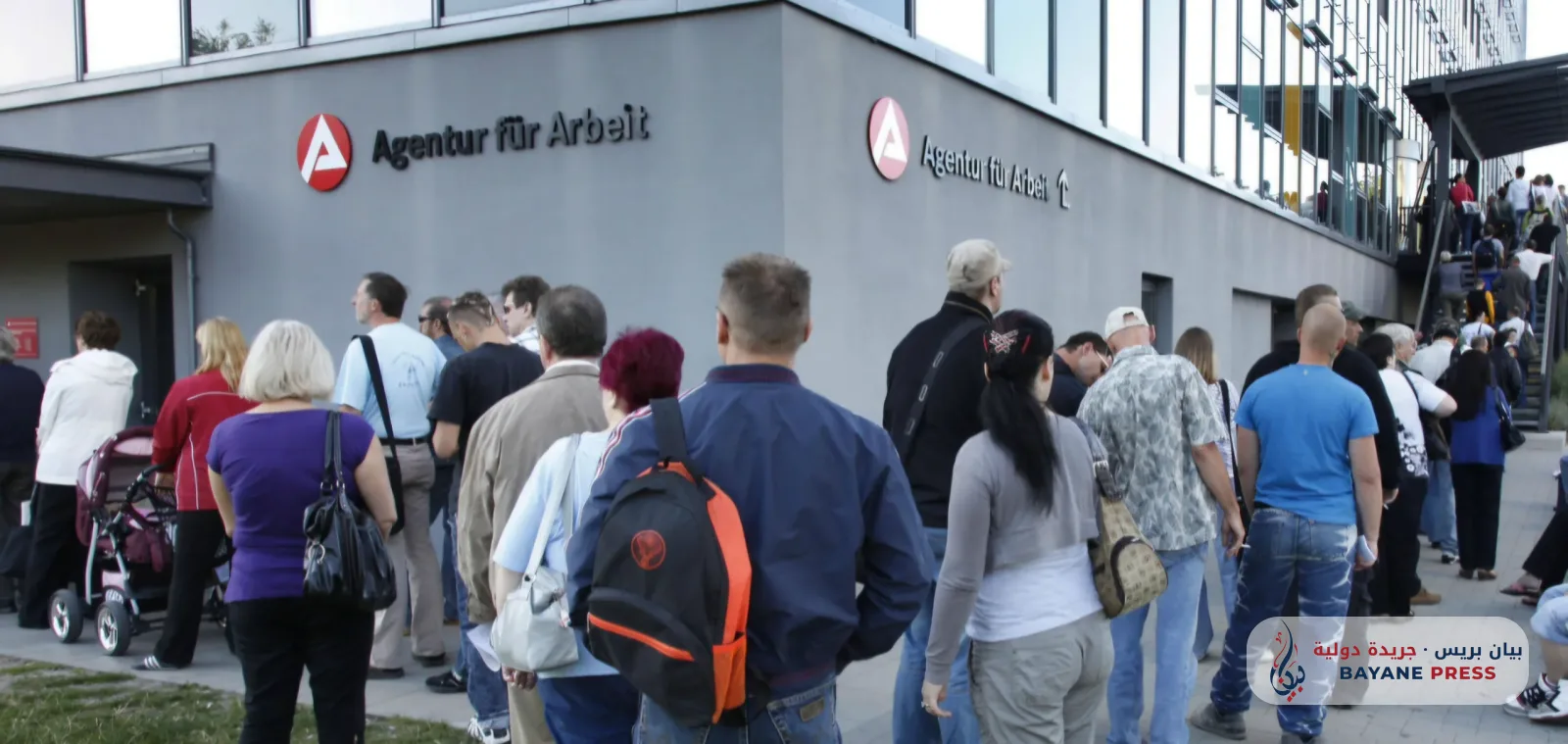
Data from Germany's Federal Employment Agency, released on Friday, November 27, 2026, revealed a persistent weakness in the labor market, as the number of unemployed rose according to seasonally adjusted figures, at a pace exceeding economists' expectations, signaling the difficulties facing Europe's largest economy.
The number of unemployed, after excluding seasonal factors, rose by nine thousand people during this November, reaching three million and 25 thousand unemployed, compared to economists' expectations polled by Reuters for an increase not exceeding four thousand people.
As for the non-seasonally adjusted figures, they showed a decrease in the number of unemployed by 19 thousand people compared to October, settling at two million and 936 thousand; however, this decline did not prevent a recorded increase of 51 thousand unemployed compared to the same period last year.
The Federal Employment Agency explained that the usual seasonal improvement during the autumn remained limited this year, while the weak trends that characterized the labor market over the past months continued.
The number of job vacancies registered with the agency reached about 646 thousand jobs, while the number of unemployment benefit recipients reached one million and 68 thousand people, an increase of 84 thousand compared to November 2025.
In a related context, the Federal Statistical Office revealed in data published today that the number of people residing in Germany engaged in professional activity reached about 45.69 million people during last October, with a slight decrease in employment recorded compared to the previous month, after excluding seasonal effects.
These indicators reflect the continued fragility of the German labor market, despite the limited decline in the total number of unemployed, as the annual comparison and seasonally adjusted figures remain more indicative of the difficulties facing the employment sector.
These developments place the German government before increasing economic and social challenges, primarily stimulating investment, restoring employment momentum, and enhancing the competitiveness of productive sectors, in a way that allows any future economic improvement to be translated into actual job opportunities.




Comments (0)
No comments yet. Be the first to react!