

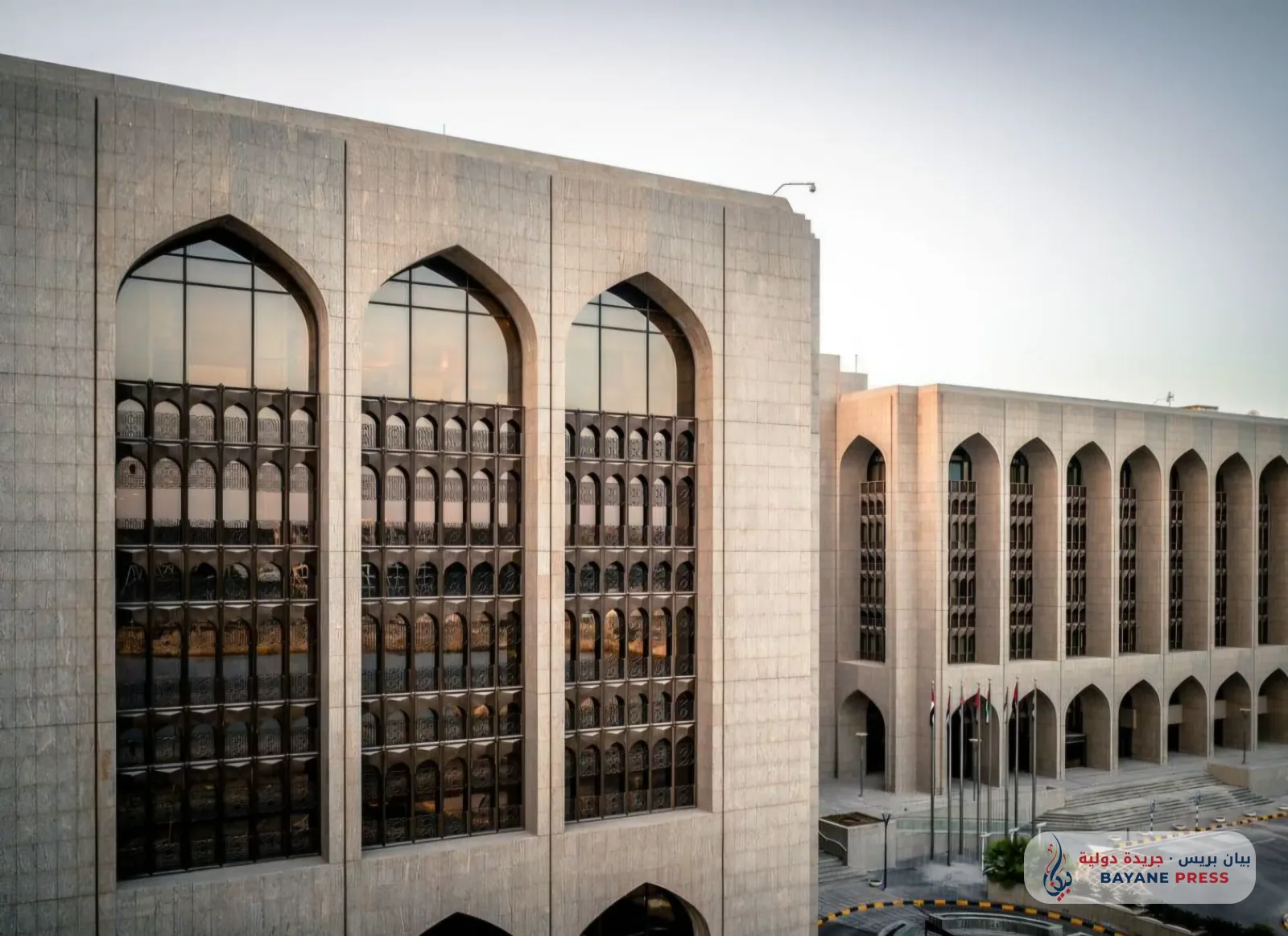
Recent financial data released by the Central Bank of the United Arab Emirates showed a notable improvement in the credit portfolio quality of the banking sector, as the ratio of non-performing loans dropped to 2.3 percent by the end of the third quarter of 2026, in an indicator reflecting the continued ability of banks to manage risks alongside the expansion of lending activity.
According to the data published today, Sunday, November 15, the ratio of troubled loans declined compared to 3.2 percent during the third quarter of 2025, and 4.7 percent during the same period in 2024, after standing at 6.8 percent during the third quarter of 2022.
The improvement was not limited to the default ratio, but also included the total value of non-performing loans, which fell to approximately 73.25 billion dirhams by the end of September 2026, compared to 84.27 billion dirhams at the end of last March, a decline of over 11 billion dirhams within six months.
In contrast, total bank credit recorded an annual growth of 17.3 percent, reaching 2.908 trillion dirhams by the end of September, an increase of 5.5 percent compared to the end of the second quarter. Banking assets also rose to approximately 5.815 trillion dirhams, achieving an annual growth rate of 11.8 percent.
At the level of financial performance, sector data showed that net income after taxes reached approximately 95.78 billion dirhams by the end of the third quarter of the current year, compared to 88.60 billion dirhams during the corresponding period of 2025, while net income before taxes recorded about 110.34 billion dirhams.
Financial solvency indicators were bolstered by the rise in banks' total regulatory capital to more than 701 billion dirhams, with the capital adequacy ratio to risk-weighted assets stabilizing at 17 percent, and the liquidity coverage ratio reaching 134.6 percent.
These developments indicate that the expansion in financing was not accompanied by a comparable rise in non-performing loans, which is an important factor in assessing the resilience of the banking sector and its ability to keep pace with economic activity.
However, continued improvement will remain tied to evolving economic conditions, interest rates, and lending quality, particularly given the interrelationship between banking activity and the real estate, investment, and trade markets.
The published indicators confirm that UAE banks continued to strengthen their financial positions during the first nine months of 2026, while maintaining strong levels of capital and liquidity, which supports their ability to finance projects and economic activities and face potential fluctuations.



Comments (0)
No comments yet. Be the first to react!