


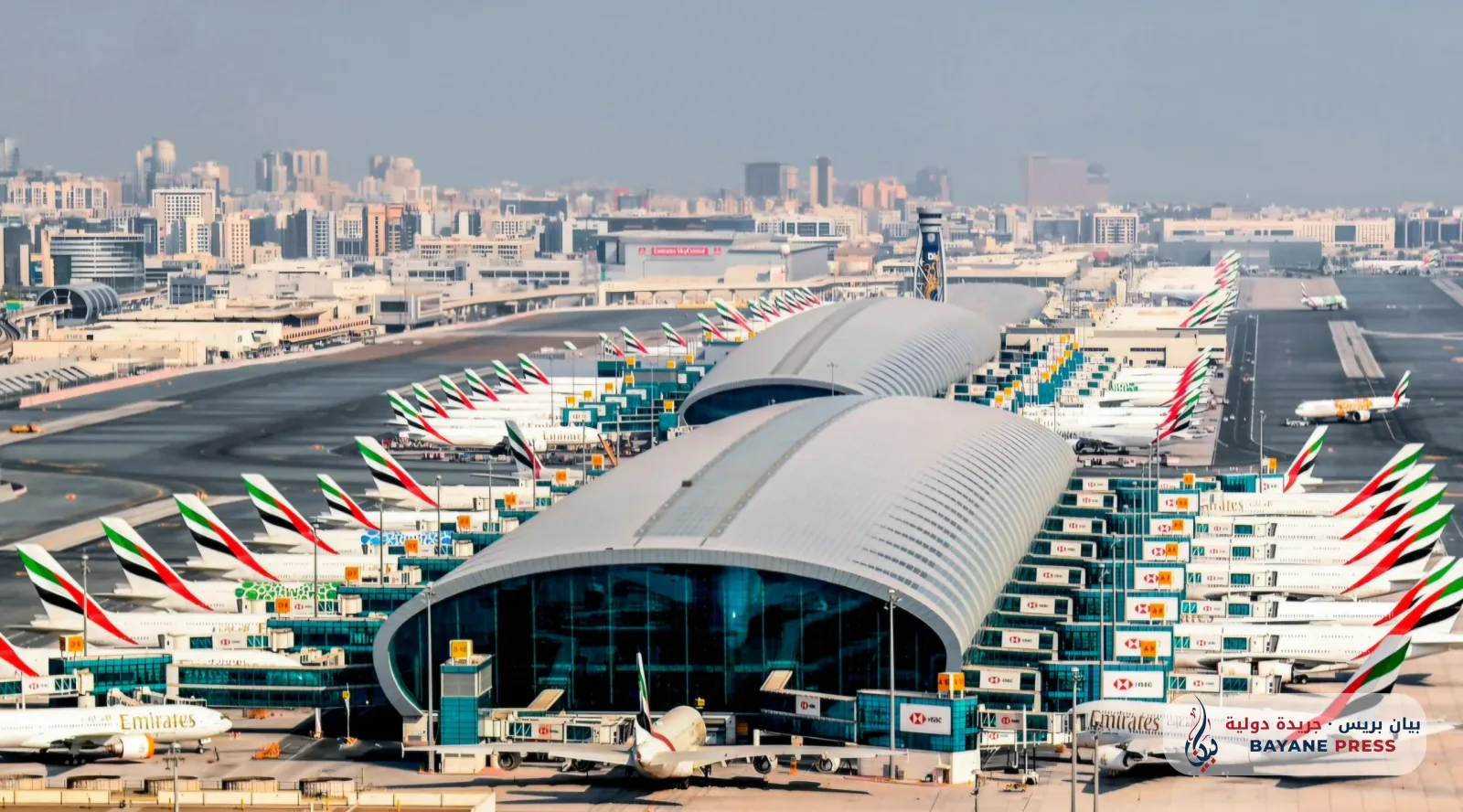
The aviation sector in the United Arab Emirates continues to strengthen its global position, supported by massive investments in airport infrastructure development, the modernization of national carrier fleets, and the expansion of international flight networks, cementing the country's status as a central hub for air transport, trade, and logistics.
Data released on Saturday, November 28, 2026, revealed that Dubai International Airport welcomed 50.4 million passengers during the first nine months of the current year, including 18.8 million passengers during the third quarter, with August recording the highest passenger traffic for the quarter at 6.6 million passengers.
The number of aircraft movements at the airport during the period from January to September reached approximately 243,000, while air cargo volume exceeded 1.2 million tons.
As part of infrastructure development, the total value of contracts awarded for the Al Maktoum International Airport expansion project reached approximately 80 billion dirhams, following the assignment of additional contracts worth nearly 56.5 billion dirhams, covering passenger terminals, facilities, and operational services.
In Abu Dhabi, the emirate's airport network welcomed 8.61 million passengers during the third quarter of the current year, an annual increase of 1.4 percent, while air cargo volume rose by 11.4 percent.
Sharjah International Airport also welcomed more than 11.6 million passengers during the first nine months of the year, coinciding with the implementation of development projects aimed at increasing its annual capacity to more than 25 million passengers by the end of 2027.
National carriers are keeping pace with these investments by expanding their international networks and modernizing their fleets, as part of a strategy aimed at enhancing the sector's competitiveness and improving the quality of services provided to passengers.
These projects serve as a strategic lever for the UAE economy, given the aviation sector's link to tourism, international trade, investment, and logistics, as well as its contribution to supporting the policy of economic diversification and enhancing the country's global competitiveness.

Comments (0)
No comments yet. Be the first to react!