

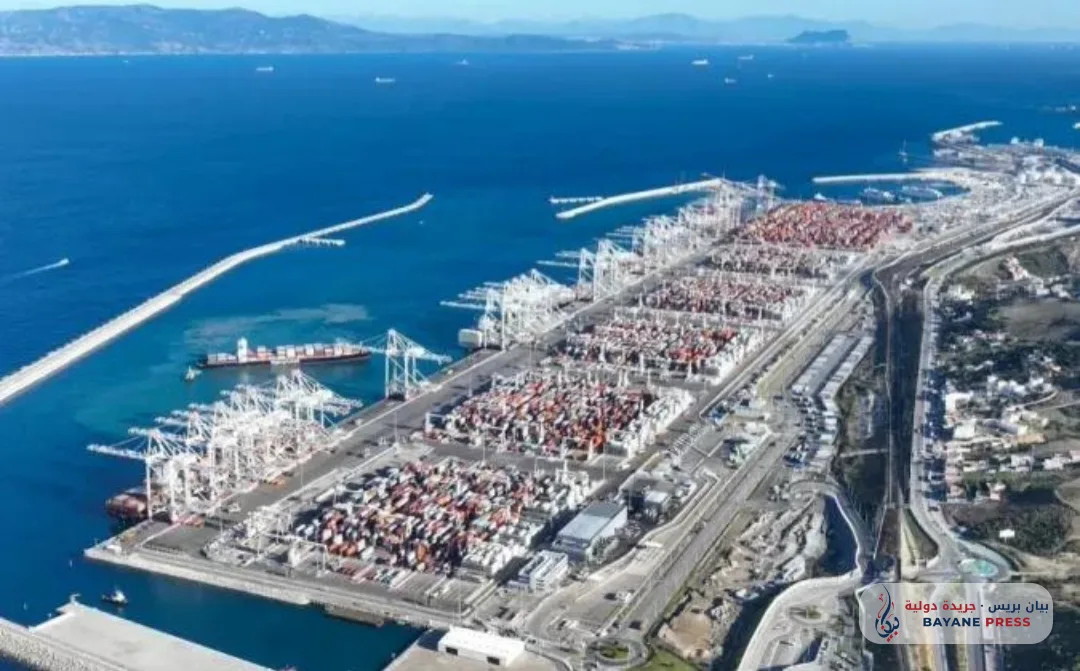
The city of Tangier marked a new milestone in the development of the African maritime economy, as it hosted, on Thursday, November 26, 2026, the presentation of the first edition of the "Blue Africa Compass" report, as part of the fourth "Blue Africa" Summit, held under the high patronage of King Mohammed VI.
The summit, organized in partnership between the Kingdom of Morocco Academy, the World Ocean Forum, and the "Blue Season" Foundation, served as a platform to discuss ways to leverage the African continent's maritime assets and transform them into a lever for economic growth and sustainable development.
The document consists of 79 pages and was prepared over a full year with the contribution of African and international experts, in response to the need to develop a shared strategic vision for the future of the ocean economy, which emerged during the "Africa for the Ocean" summit in Nice, France, in June 2025.
The report starts from an economic paradox: Africa's limited benefit from the global ocean economy, despite possessing approximately 48,000 kilometers of coastline and 13 million square kilometers of exclusive economic zones.
The roadmap is based on four main priorities, including enhancing local value added, improving maritime resource governance, developing scientific knowledge, and involving coastal communities in the formulation of development policies.
The document recommends directing investments toward the port, fisheries, tourism, and energy sectors, encouraging the local processing of marine resources, developing sustainable aquaculture, and combating illegal fishing, in addition to mobilizing innovative funding sources, including blue bonds and debt-for-nature swap mechanisms.
The report paid special attention to the Moroccan experience in developing port infrastructure, citing the Tanger Med model and the Dakhla Atlantic Port project as examples of the integration between port activity, industrial zones, and land transport networks.
It also highlighted the importance of the Royal Atlantic Initiative aimed at enabling Sahel countries to access the Atlantic Ocean and facilitating their trade exchanges by leveraging Moroccan infrastructure.
To ensure the monitoring of the implementation of the recommendations, the document proposed adopting an annual mechanism to evaluate investments and their impact on employment, value added, and ecosystem protection, as well as the creation of a multilateral African body dedicated to ocean affairs.
The focus on the Moroccan experience within this strategic roadmap highlights the potential offered by the Kingdom's Atlantic facade in strengthening African economic integration and developing trade exchanges between Africa, Europe, and the Americas.

Comments (0)
No comments yet. Be the first to react!