

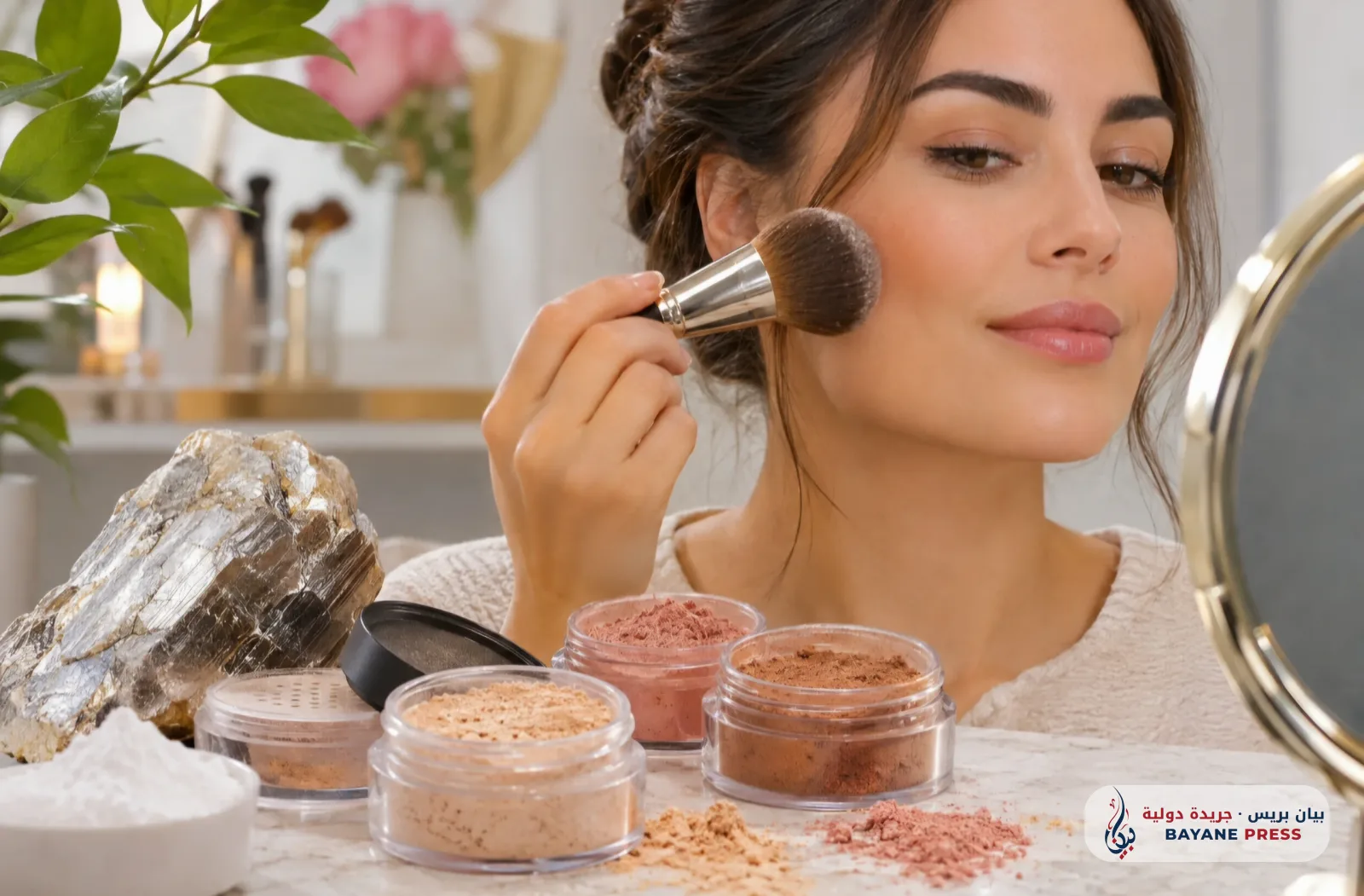
Mineral cosmetics are gaining popularity among women seeking formulas different from traditional products, especially with the proliferation of items marketed as natural or suitable for sensitive skin. However, the reality of this type of makeup is more complex than commercial advertisements suggest, as its properties vary depending on the ingredients and manufacturing methods.
Mineral makeup is based on mineral substances used to provide color, coverage, or improve texture, including iron oxides, mica, titanium dioxide, and zinc oxide, depending on the nature of the product.
Iron oxides are used to produce various shades of yellow, red, brown, and black, which help create the colors for foundations, powders, and blushes. Mica is used in some formulas to give the skin a glow or a pearlescent effect, while titanium dioxide and zinc oxide are incorporated into cosmetic and sunscreen products for various purposes.
Mineral makeup is often available in loose or pressed powder form, and there are also liquid and cream formulas that contain mineral pigments. Some products can provide buildable coverage that starts as a sheer layer and becomes more opaque with additional applications.
It is a common misconception that all mineral products are entirely natural or free from ingredients that may cause allergies; some products contain additional components, and skin reactions can vary from person to person.
Furthermore, the presence of zinc oxide or titanium dioxide in a foundation does not automatically make it a substitute for sunscreen. Protection depends on the product's formulation, testing, the stated SPF level, and the actual amount applied.
An important distinction is that mineral sunscreens are primarily designed to protect against ultraviolet rays, while the main goal of mineral makeup is cosmetic. A single product may combine both functions when it meets the necessary protection requirements.
Some women with oily skin may benefit from powder formulas that help reduce shine, while dry skin requires proper moisturizing before applying the powder to avoid highlighting flakes.
Caution should also be exercised when using loose powders, especially in enclosed spaces or near children, to limit the scattering and inhalation of particles. It is preferable to apply the product with a suitable brush without dispersing large amounts into the air.
A common mistake is using mineral makeup as a treatment for acne or pigmentation, even though its primary function is to improve appearance and it should not replace necessary medical care.
Mineral makeup remains a cosmetic option that can yield good results, but its true value lies in the quality of its formula and its suitability for skin needs, rather than simply being labeled as natural or mineral-based.

Comments (0)
No comments yet. Be the first to react!