


Moroccan-Spanish relations have turned into a political bargaining chip in the electoral campaign currently underway in Spain, in preparation for the legislative elections scheduled for 29 November, as statements from Spanish party leaders have brought issues of migration, borders, and cooperation with Rabat to the forefront of the debate, amidst a clear divide between those defending the continued partnership with Morocco and those calling for a review of some of its foundations.
The Spanish newspaper "PR Noticias" revealed in a report published this Monday, 23 November, that Morocco has become a fixture in the electoral discourse of several political forces, especially after the debate between Prime Minister Pedro Sánchez and the leader of the opposition People's Party, Alberto Núñez Feijóo, on 19 November, which saw an exchange of criticisms regarding the management of foreign relations and migration policy.
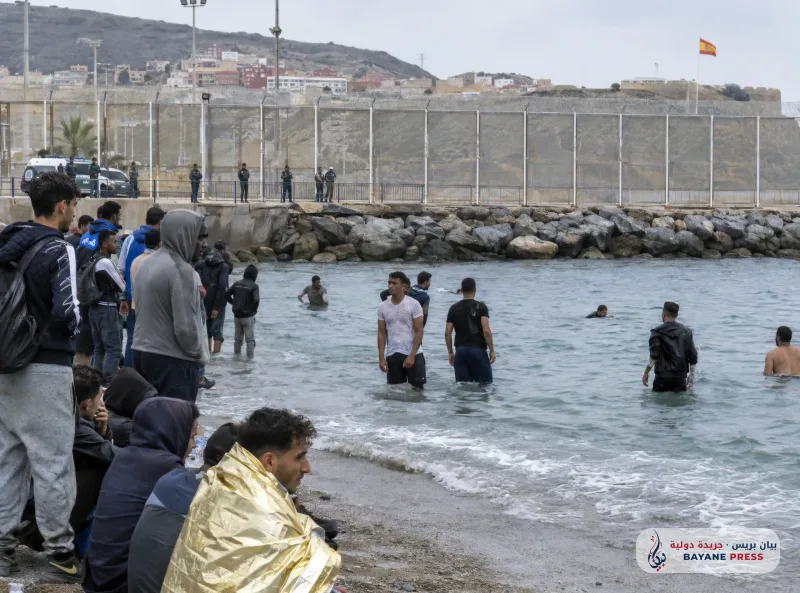
Feijóo criticized the Sánchez government's handling of relations with Rabat, citing the crisis of migrants entering Ceuta and noting that Spanish intelligence services had previously warned of potential developments, in an attempt to question the government on the effectiveness of its management of borders and bilateral relations.
In contrast, Sánchez defended a policy based on European cooperation and the regulation of migration through legal and safe pathways, while rejecting the creation of migrant deportation centers outside the European Union, arguing that addressing the phenomenon requires balancing security requirements with humanitarian obligations.
As for the leader of the Vox party, Santiago Abascal, he went further in his electoral speech, directly accusing the Spanish government of being lenient with Morocco, demanding stricter border controls, a review of bilateral agreements, and even proposing sanctions against Rabat and the suspension of some aspects of cooperation. These are political positions adopted by his party as part of its electoral campaign and do not represent official decisions of the Spanish state.
The presence of Morocco in this debate reveals that relations between the two countries are no longer just a diplomatic file managed between governments, but have become part of internal partisan competition, where some political forces use issues of borders, migration, and sovereignty to attract voters, while other parties emphasize the importance of cooperation with Rabat to face common challenges.
These developments are particularly significant given the economic, commercial, and security interdependence between Morocco and Spain, as well as cooperation in combating irregular migration networks and cross-border crime. Therefore, calls to review bilateral relations raise questions about their potential impact on the interests of both countries, especially if they move from electoral slogans to actionable government programs.
In a political reading of this landscape, it appears that Morocco has become a fixture in the discussion regarding the future of Spanish foreign policy, but the intensity of electoral rhetoric does not necessarily mean a shift in official relations, as economic interests, international obligations, and security cooperation remain fundamental factors in determining the direction of any future Spanish government.

Comments (0)
No comments yet. Be the first to react!