

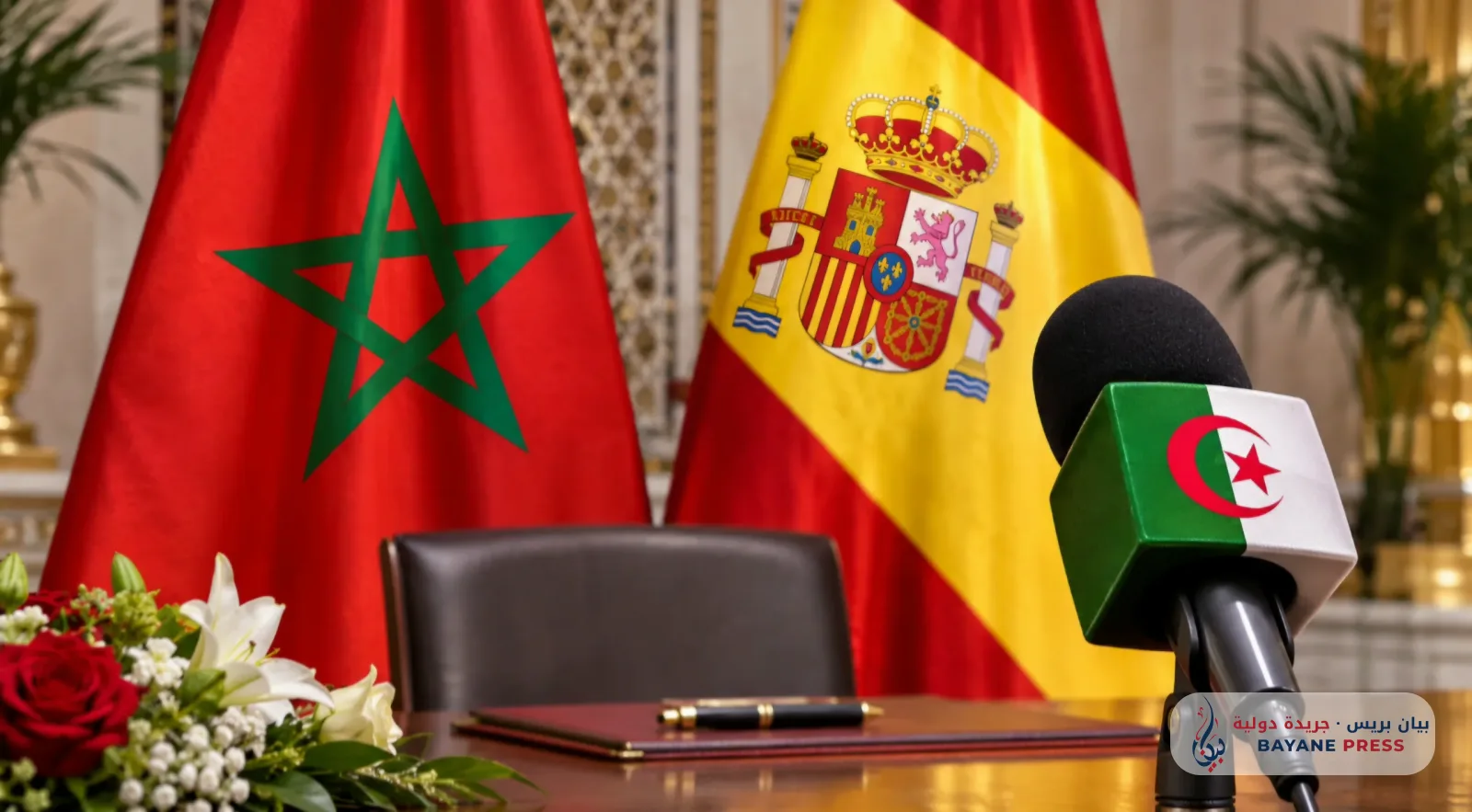
The Algerian newspaper "Echorouk" dedicated a long interview on Saturday, November 28, 2026, to exploring the repercussions of the Spanish general elections on relations between Rabat and Madrid, particularly the future of Spanish support for the Moroccan autonomy initiative, in the event of a transfer of power from the Socialists to right-wing parties.
In the interview, conducted by journalist Abdelkader Sekia with researcher on Spanish affairs Mohamed Bachir Lahcen, the speaker acknowledged that a right-wing victory does not necessarily mean Madrid will backtrack on the position announced by Pedro Sánchez's government in 2022 regarding the Moroccan Sahara issue.
The researcher noted that any reversal of this position would carry political and security costs that the next Spanish government would find difficult to bear, given the importance of cooperation with Morocco in managing migration and security files.
However, he suggested that, in the event of a right-wing victory, Moroccan-Spanish relations might not experience the same political momentum seen during the Socialist administration, ruling out the possibility that the next government would strengthen its support for the Moroccan initiative at the same pace.
The interview was not without accusations directed at Rabat regarding the use of security cooperation and the migration file in its relations with European countries—accusations that reflect the speaker's political stance without providing independent evidence to support them in the published interview.
This analysis comes on the eve of the early Spanish legislative elections, scheduled for Sunday, November 29, 2026, amidst political competition between the Socialist Party and the conservative People's Party, with the possibility of the far-right "Vox" party playing a decisive role in forming the next government.
Madrid had made a significant shift in its policy toward the Moroccan Sahara issue in 2022, when it declared the Moroccan autonomy initiative, presented in 2007, as the most serious, credible, and realistic basis for resolving the dispute.
The importance of the interview published in the Algerian newspaper lies in its dismissal of a radical reversal in the Spanish position, even if the ruling political majority changes, given the strategic interests that unite Morocco and Spain.
Nevertheless, this analysis remains within the realm of political speculation, as the future of relations between the two countries remains tied to the election results, the composition of the next government, and the official decisions Madrid will take after its formation.
Comments (0)
No comments yet. Be the first to react!