

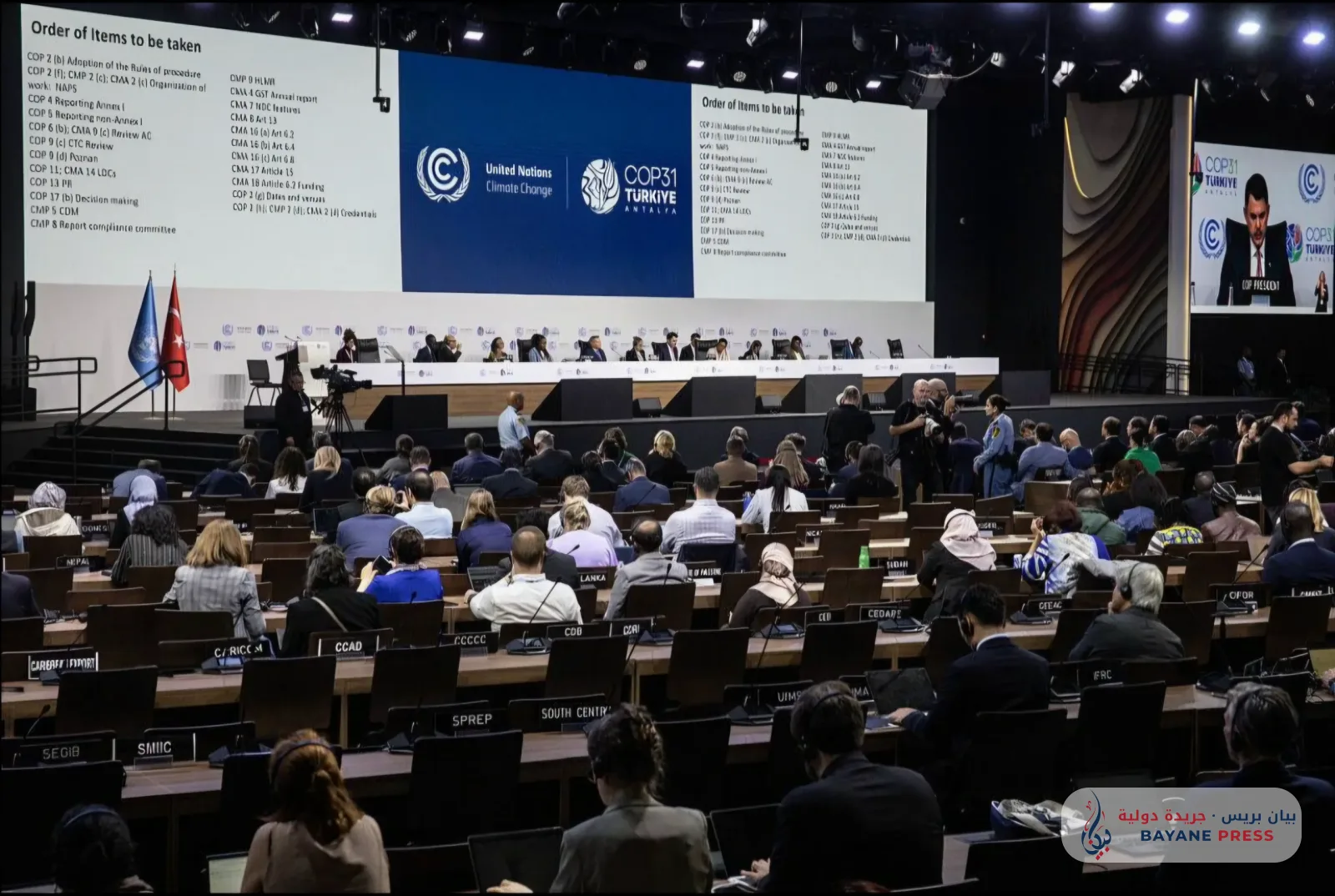
The UN Climate Change Conference 'COP31', hosted in the Turkish city of Antalya, has concluded in a major diplomatic failure, as participating nations were unable to reach a comprehensive political agreement on the next steps to combat global warming, following sharp disagreements over fossil fuels and funding for countries most affected by climate change.
The negotiations collapsed on Sunday, November 22, after the conference was extended for approximately 44 additional hours in a final attempt to bridge the divisions that emerged between industrialized nations, oil-producing countries, and developing nations.
The core dispute centered on the proposed wording of the final agreement, which did not include an explicit reference to fossil fuels. This was rejected by the European Union and several other nations, who argued that ignoring the primary source of greenhouse gas emissions represents a retreat from previous climate commitments.
Developing nations also criticized the lack of guarantees regarding climate finance, demanding clearer financial resources to help them cope with drought, floods, and disasters linked to rising temperatures.
UN officials expressed their disappointment with the outcome, while environmental activists warned that continued political divisions could delay the necessary measures to limit global warming.
The failure of the conference does not mean the cancellation of previous agreements, including the Paris Agreement, but it highlights the scale of the difficulties facing international negotiations, especially when environmental commitments clash with the economic and energy interests of nations.
This result leaves the international community facing a new test, at a time when extreme weather events are increasing and the human and economic losses resulting from climate change are mounting.

Comments (0)
No comments yet. Be the first to react!