

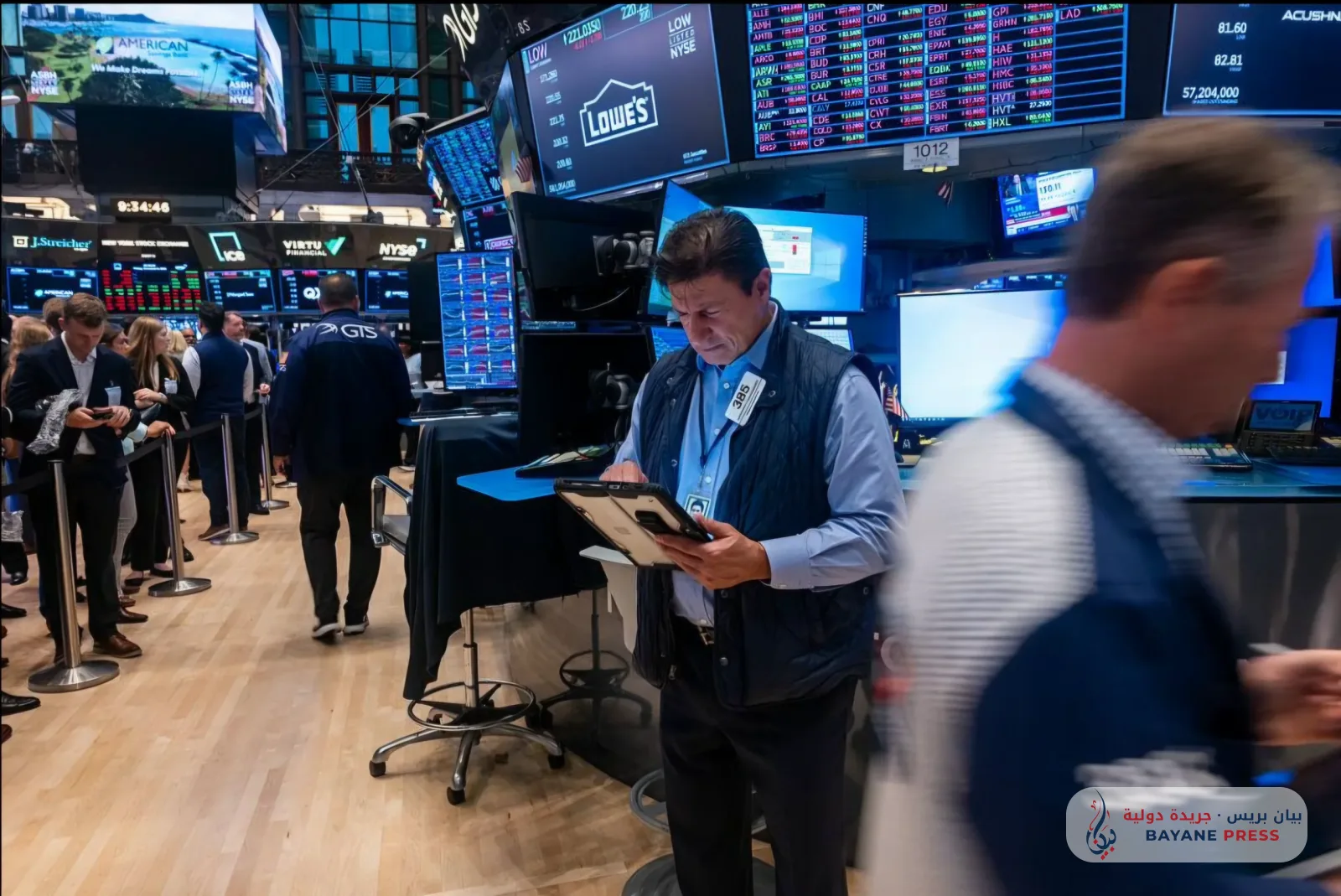
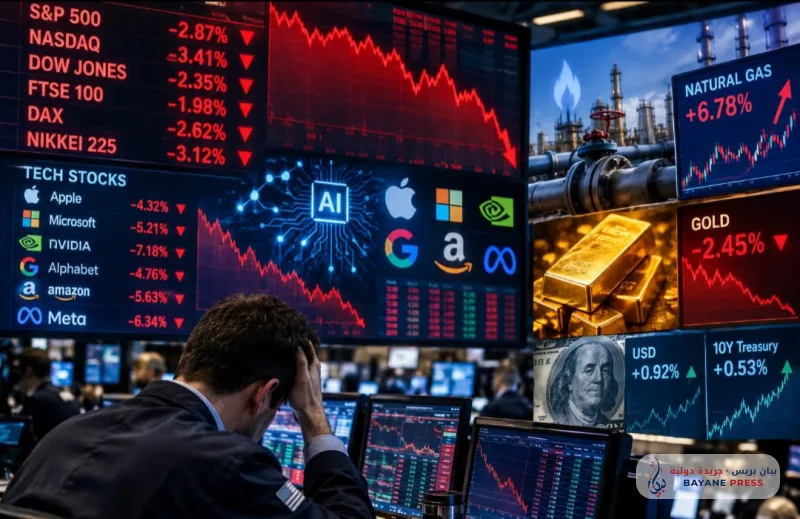
Global financial markets are experiencing increased volatility amid growing concerns over high valuations of artificial intelligence companies, as massive investments in data centers and digital infrastructure begin to raise questions about their ability to generate financial returns commensurate with their costs.
Reuters reported on Monday, November 23, 2026, that technology and semiconductor stocks have faced selling pressure in recent weeks, prompting investors to reassess their expectations regarding the sector's continued rapid growth.
Concerns are centered on the volume of funds allocated to building advanced computing centers, purchasing electronic chips, and providing electricity, cooling, and connectivity, against the lack of clarity on the time required to convert these investments into actual profits.
The reliance of some companies on borrowing to fund their expansion is also worrying investors, especially with the potential for rising financing costs or delays in expected revenue from artificial intelligence services.
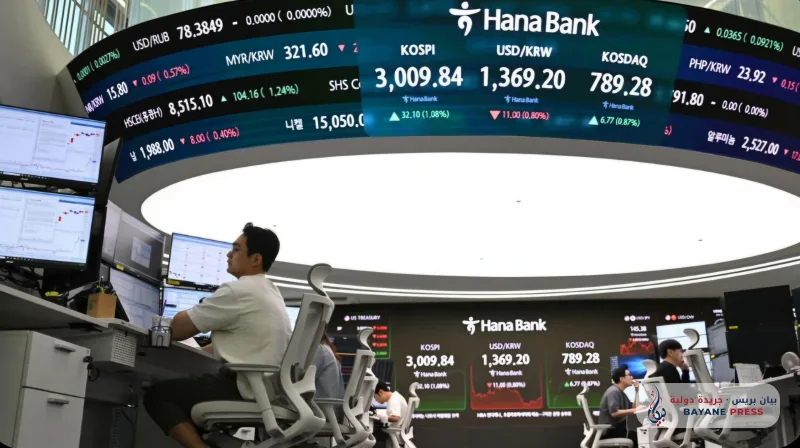
Asian markets saw mixed performance during Monday's trading, with continued pressure on some technology stocks, while U.S. stock futures recorded gains following a wave of heavy losses the previous week.
In the face of volatility, Taiwan announced stricter regulations on short selling, while Chinese markets took measures to support funding for stock investments, and South Korean authorities confirmed their readiness to intervene if conditions warrant.
These moves reflect the importance of technology and semiconductor companies to Asian economies, given their close ties to production chains for components used in data centers and smart systems.
In the United States, investors are awaiting the release of the Personal Consumption Expenditures (PCE) index on Wednesday, November 25, as it is one of the key indicators the Federal Reserve relies on to assess inflation and determine the direction of monetary policy.
The upcoming data is of particular importance as expectations of potential interest rate hikes persist, because rising borrowing costs can affect the valuation of companies whose stock prices depend on high future earnings expectations.
The downward trend does not mean that the artificial intelligence sector has lost its economic potential, but rather reflects a growing trend among investors to demand that companies demonstrate clear financial results instead of merely announcing investments and expansion.
The ability of companies to convert technological spending into sustainable revenue remains a key factor in determining the direction of markets in the coming period.


Comments (0)
No comments yet. Be the first to react!